

The Equalizer
A short dark story, set in Thailand

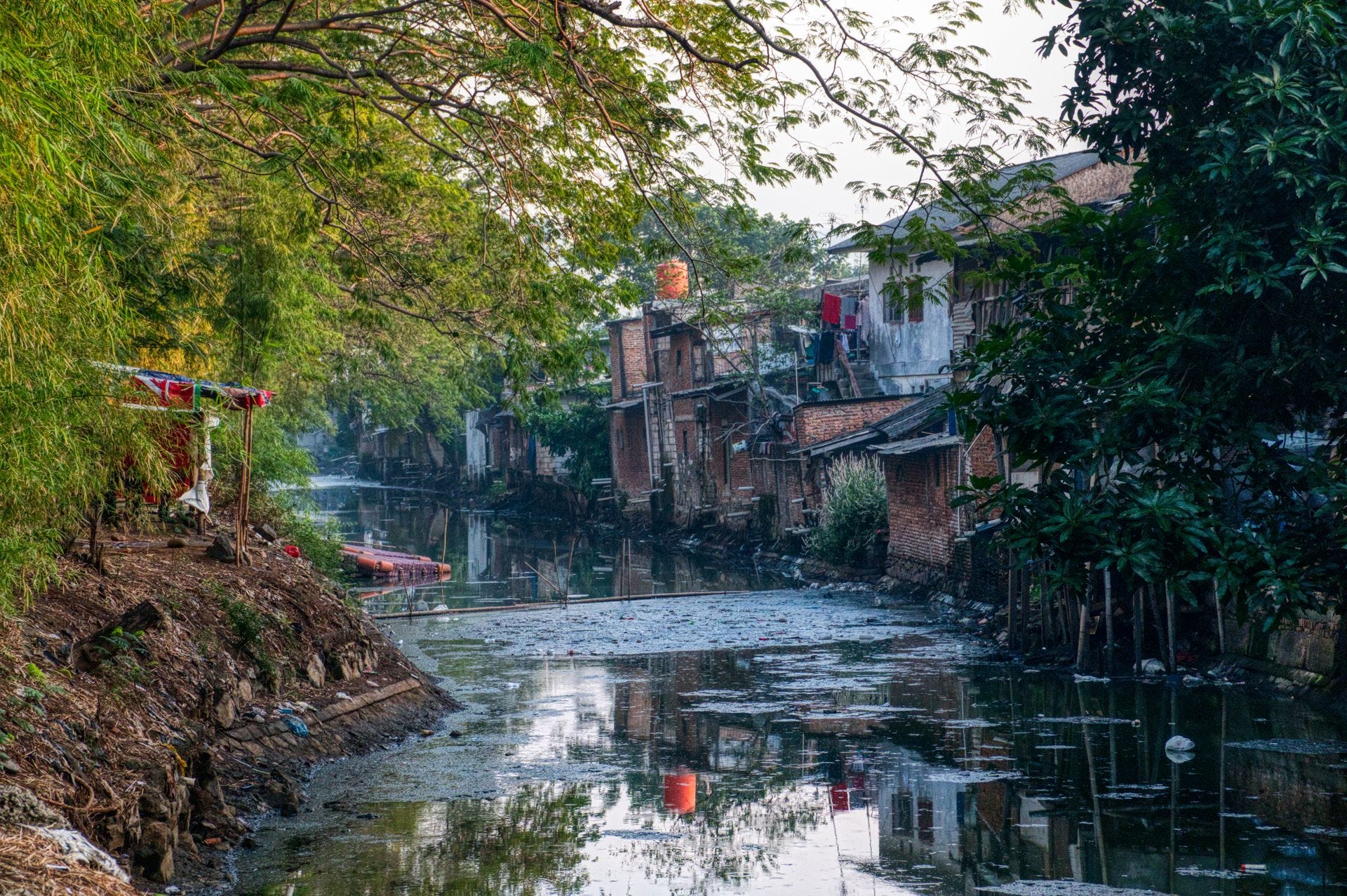
The heat in Klong Toey doesn’t break at night. It just changes texture—from a wet rag on your face to something denser, like the air itself is dying. Mark Harrington learned this at 2:17 a.m., stumbling through a corridor of rusted corrugated iron and laundry lines strung with shadows.
He’d left the rooftop bar at the Sathorn tower three hours ago. Twelve thousand baht of Johnnie Walker Blue coating his tongue. His thousand-pound Oxfords were now filled with something viscous and unspeakable. His phone had died somewhere between a soi dog and a ladyboy offering directions he’d been too drunk to follow.
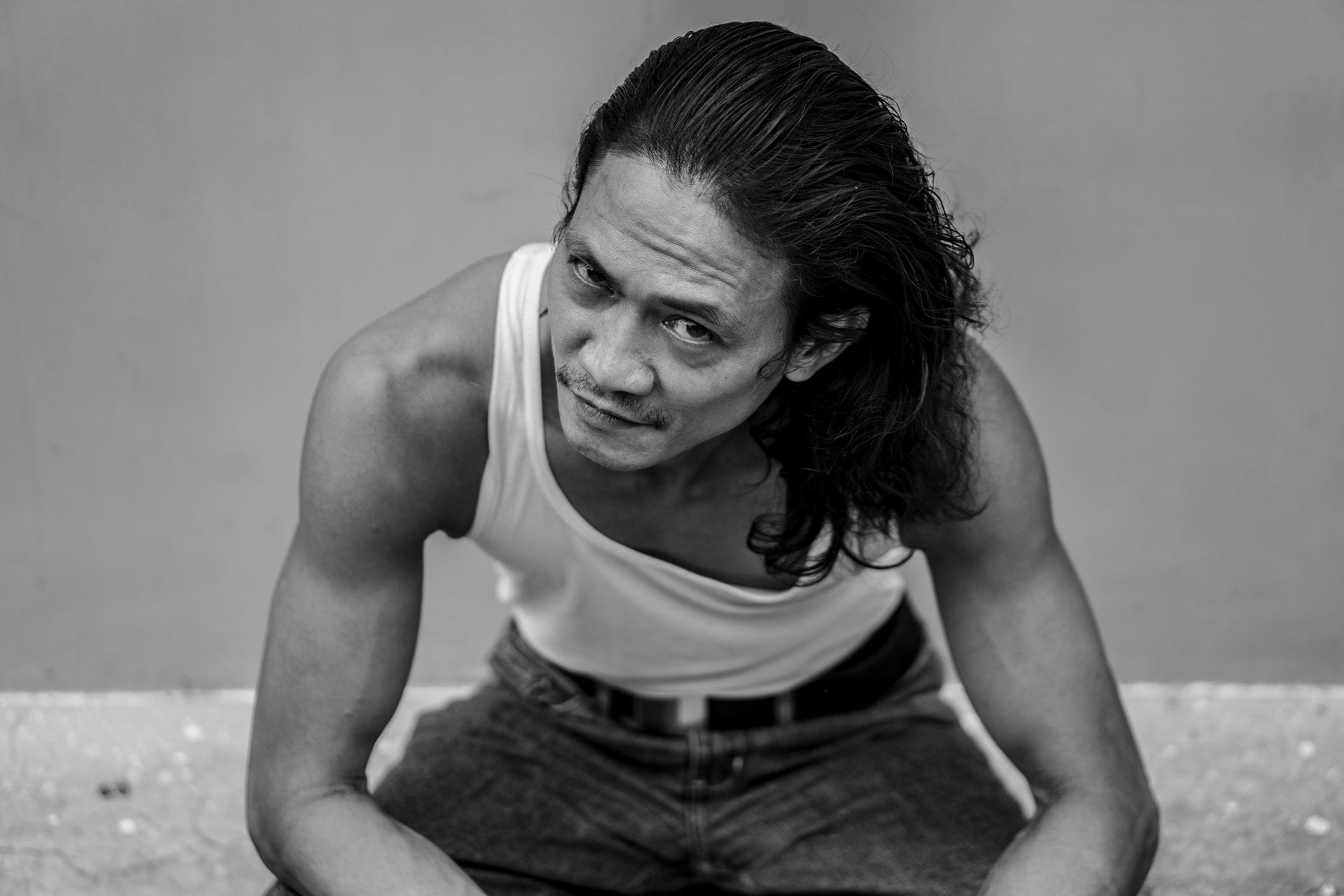
The men found him near the canal, where the stench of raw sewage and diesel fought for dominance. Three of them. Compact. Efficient. The one in front wore a gold chain with a Buddha so fat it looked obscene.
“You lost, khun farang?” The English was precise, honed by someone who learned it to properly hate its native speakers.
Mark tried to smile. “Just heading back to—”
The fist to his solar plexus had no warning. No telegraph. Just a sudden absence of air and the intimate introduction of his face to the cracked concrete.
When he came to, he was in a room that might once have been a storage unit. Now it was a den. Bare bulb swinging. A desk with glassine bags and a scale. And on the wall, photographs—not people, but houses. Big ones. The kind with gates.
“You know what I see when I look at you?” The gold-chain man was sitting on an overturned bucket, rolling a cigarette with thick, scarred fingers. “I see my father’s spine. Broke it at forty-five. Lifting crates of shrimp at the pier. For a man like you. Or your father. Some English hi-sowho never lifted anything heavier than a fucking wine glass.”
Mark tried to sit up. His ribs disagreed. “I’m not—”
“I didn’t ask.”
The next hour was a symphony of small violences—a dislocated finger. Burn from the cigarette—not on the arm, but the neck, where it would stay visible. A knee that would never track quite right again. A quiet, almost meditative commentary accompanies each act.
“The year I turned twelve, my mother gave me one gift—a single orange. We couldn’t afford it. She stole it. You know what I got also from my mother when I was twelve? Nothing. Because I was already in a juvenile detention centre for stealing a watch so I could eat.”
Snap. Another finger. Mark’s scream bounced off the corrugated walls.
“Your watch alone—” the gangster leaned in, breath smelling of fermented fish and triumph. “That’s two years of my mother’s life. She’s dead now. Died in a government hospital because the private one wanted a deposit.”
Mark spat blood. “My father. Was a plumber.”
The fist stopped mid-arc.
“Bermondsey. South London.” Mark’s voice was a ragged whisper now. “Council flat. Two bedrooms. Seven people. My mum cleaned offices. I slept on a sofa until I was sixteen.”
The gangster’s face didn’t change. But something behind his eyes flickered—a mouse in a dark room.
“You’re lying.”
“My first job.” Mark coughed. Something wet. “Age eleven. Washing dishes in a Wetherspoons. Paid cash in hand. My school shoes had holes. My mum used to put cardboard in them when it rained.”
The Buddha pendant swayed as the man stood. He walked to the desk. Picked up a blade—not large, but well-kept and turned it over in his hands.
“Why the suit?” Soft now. Almost conversational. “Why the watch?”
“I built a company.” Mark tried to shift his weight. “Demolition. Started with a single skip and a sledgehammer. Now I do entire housing estates. Still got the calluses. Want to see?”
He held up his good hand. The palm was rough. The rough that comes from a working life, not a gym.
The gangster stared at it for a long time. Then he laughed. It was not a pleasant sound.
“So what?” He gestured around the room, at the poverty bleeding through every surface. “You escaped. Good for you. These kids—” he nodded toward the window, toward the unseen warren of shacks and hungry eyes, “—they won’t. Their fathers are the ones breaking their spines right now. For men like the one you became.”
He set the blade down. Walked to the door. Paused.
“Get out.”
Mark didn’t move immediately. His body was negotiating with gravity. His fingers—the broken ones—sang a hymn of nerve damage. But his mind was suddenly, terrifyingly clear.
“Your mother,” he said.
The gangster turned.
“What was her name?”
A silence long enough for the bare bulb to flicker.
“Somchit.”
“Somchit,” Mark repeated. He pushed himself to his feet. One leg almost buckled. “She died in a government hospital.”
“Yes.”
“Because she couldn’t afford a deposit.”
The man’s jaw tightened. “You want to die tonight, Englishman?”
“No.” Mark limped toward the desk. Toward the scale. Toward the photographs of big houses with gates. “I want to tell you about a hospital I built in Phnom Penh. Last year. And a school in Yangon. And a dormitory for factory workers’ daughters in Chiang Rai.”
The gangster’s hand drifted toward his waistband.
“I’m not saying it to impress you.” Mark met his eyes. They were the same height. Same hard-won survival in the sockets. “I’m saying it because I know something you don’t.”
“Which is?”
Mark smiled. It looked terrible on his split lip.
“Class traitors are the most dangerous people on earth because we know exactly where the bodies are buried. On both sides.”
He reached into his jacket—the gangster flinched, but didn’t draw—and pulled out a crumpled business card. Real gold foil. Disgusting, really. He tossed it on the desk.
“Three days. Come to that address. Bring anyone you want. Anyone you trust.”
“And if I just cut your throat and take your wallet?”
“You won’t.” Mark limped toward the door. “Because you’re not actually stupid. You’re just angry. And anger without strategy is just poverty with better PR.”
He stepped out into the Klong Toey night. The air still stank. The dogs still watched. But a dozen small faces had gathered in the alley—children from the surrounding shacks, drawn by the noise, the violence, the strange farang bleeding on their dirt.
The oldest was a girl. Maybe ten. Her shirt was three sizes too large. Her feet were bare. Her eyes held nothing but calculation.
Mark lowered himself to one knee. It hurt more than anything the gangster had done.
“Hey,” he said softly. “You want to go to school?”
The girl looked at his blood. His broken fingers. His thousand-pound Oxfords now filled with unspeakable things.
“No,” she said. “I want to eat.”
Mark nodded. Reached into his other pocket—the one the gangster hadn’t searched—and pulled out a folded thousand-baht note. Pressed it into her hand.
“That’s for tonight. Tell your mother. Tell her a man named Mark is going to come back tomorrow. With other men. Better men.”
He stood up. The world spun. He let it.
Behind him, the gangster stood in the doorway. The blade was still in his hand. The business card is still on the desk.
Neither of them looked back.
But three days later, when the girl and her mother and seventeen other families from the soi showed up at the address on the card, they found a rented conference room, a table full of pastries neither woman nor child had ever seen, and two men—one bruised, one gold-chained—standing side by side, arguing about foundation grants in voices too quiet for violence.
It wasn’t redemption. Redemption was for stories with clean endings.
This was just two men who understood, finally, that the enemy had never been each other.
The enemy had the gates. And the gates were coming down.
The END
Short stories, set in Thailand at Amazon HERE

Dee mak!!! Absolutely stunning piece of writing, Colin! The heat, the smells, the poverty, the twist! It all just fits like a glove on a calloused hand ✋
Hey, what are the chances of Elon Musk becoming an "equalizer". Yeah, me too.
Thanks, Colin!
Great story, Colin. What divides us is sometimes not as important as what unites us.