

Quiet Girl
A short dark story, set in Thailand

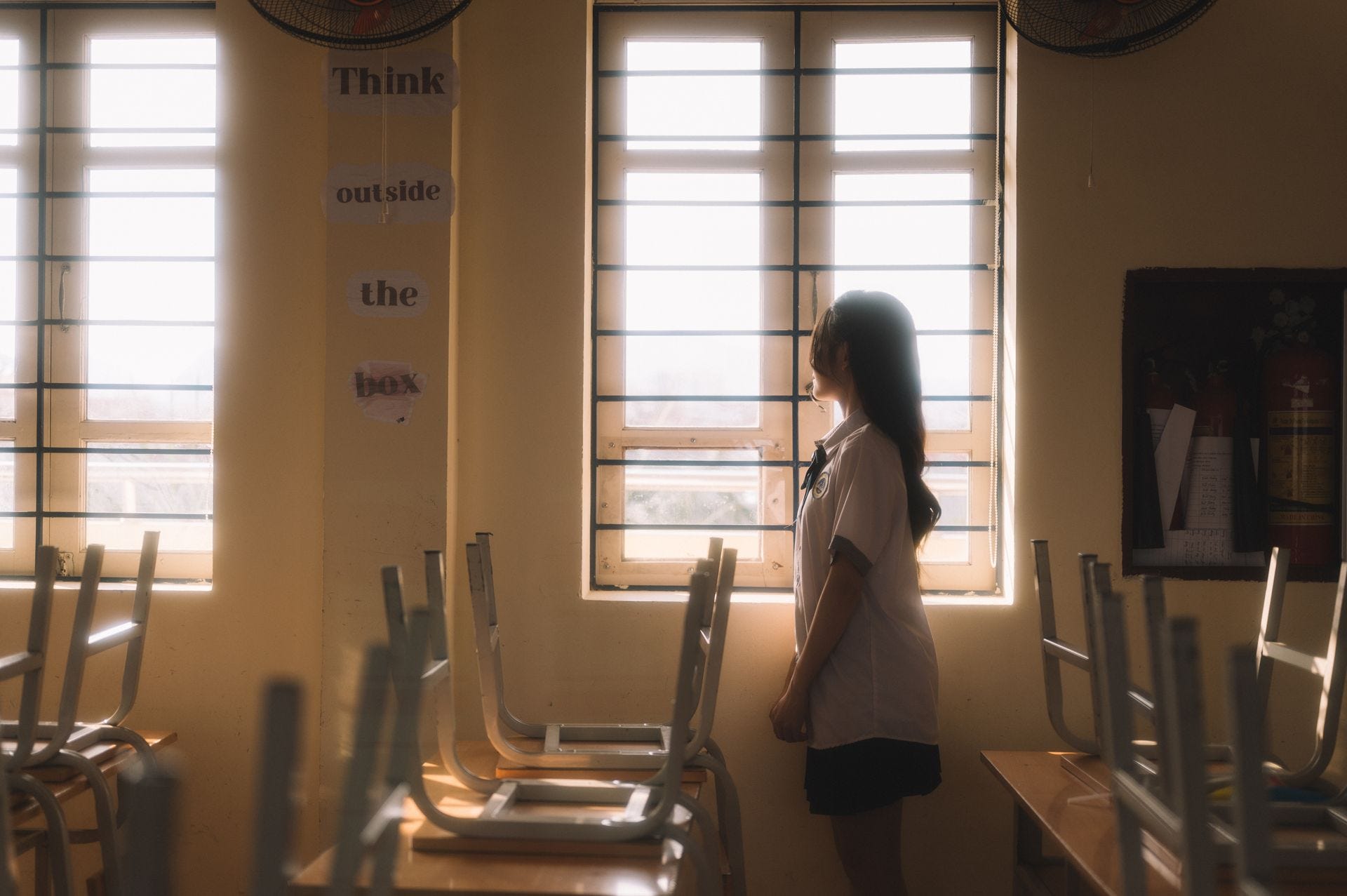
The winter they left England, the frost had settled into everything—the cracks in the window frames, the marrow of Mara’s bones, the space between her mother’s silences. She was eleven years old, and she knew the geography of a slammed door better than the map of any country she’d ever lived in.
Her father, Gary, had been a big man. Not fat—thick. The thick that made doorways shrink when he walked through them. He drank lager from cans and spoke to her mother in a voice that started low and ended in a shout, like a car engine failing to turn over. Mara had learned to read that engine years ago. The clench of his jaw. The way he set down his fork. The precise angle of his shoulders when he turned to look at her mother across the dinner table.
Run, that angle said. But there’s nowhere to go.
The night they actually left, Gary had come home with something dark on his hands. Not blood—Mara had seen blood before, from her mother’s split lip, from her own nose when she’d fallen wrong trying to get out of his way. No, this was grease, black and viscous, like he’d been digging inside some dead machine. He’d grabbed her mother by the wrist and said something in a whisper that Mara couldn’t hear, but she saw her mother’s face change. The way an animal’s face changes when it smells smoke and knows the forest is on fire.
Her mother, Somsri, had been saving for three years. Notes folded into a sanitary pad packet at the bottom of the bathroom cabinet. Coins in a rice bag at the back of the freezer, behind the frozen peas, no one ever ate. Mara hadn’t known any of this at the time. She only knew that at 2:47 in the morning, her mother shook her awake with a hand over her mouth, a single backpack already slung over her shoulder, and two tickets to Bangkok in her coat pocket.
They didn’t run. Running was for people who thought they might come back. What they did was flee. Mara learned that word later, in a Thai textbook she couldn’t read, tracing the characters with a finger that still remembered the cold of the Gatwick departure gate.
The village was called Ban Nong Khao, and it was the opposite of everything Mara had known. The heat was a physical thing, an animal that lay across her chest and refused to move. The air smelled of fish sauce and jasmine rice and something green and rotting at the edges. Her grandmother’s house stood on stilts above a dirt yard where chickens scratched at nothing and a dog with ribs like xylophone keys slept in the shade of a mango tree.
Mara couldn’t speak Thai. She could understand some—her mother had spoken it at home, when her father wasn’t there to sneer and say Speak English, we’re in England—but the words came out of her mouth wrong, flat and foreign, like she was trying to whistle without knowing the tune. The village children laughed at her when she tried. They called her farang kee nok, which her mother refused to translate, and luk khreung with a sneer that made it sound like an illness.
Her grandmother was a small woman with teeth stained red from betel nut and a voice like gravel being poured from a bag. She looked at Mara for a long time on that first day, then turned to Somsri and said something in rapid Isaan dialect that Mara caught only pieces of: eyes like his, and you brought the ghost back with you, and what’s done in blood stays in bone.
Somsri had found a school. Not a good one—the good ones were in Khon Kaen or Udon, too far to commute—but a school nonetheless. A single-story concrete building with bars on the windows and a yard of packed dirt where the students gathered each morning to sing the national anthem and watch the flag rise. The headmaster was a man named Ajarn Prasit, who wore thick glasses and had a habit of touching the girls’ shoulders when he spoke to them. He took one look at Mara’s pale brown skin and her sharp, English features—her father’s jaw, her father’s eyes—and smiled in a way that made Somsri’s hand tighten on her daughter’s arm.
“She will need to work hard,” Ajarn Prasit said in English, for Mara’s benefit. “The other children are not always kind to those who are different.”
That was the first honest thing anyone had told her.
The boys were three. There was Krit, who was thirteen and already had the body of a man, wide-shouldered and thick-necked, with a laugh that boomed across the schoolyard. There was Mong, who was small and quick and cruel in the way small, quick things are cruel—biting at ankles, laughing at stumbles, whispering things in Thai that made the other children cover their mouths. And there was Boat, whose real name was something longer and more formal, but whom everyone called Boat because he was fat and slow and moved like a vessel without a rudder.
Boat was the worst. Not because he was the ringleader—that was Krit—but because Boat seemed to understand, on some level, what it felt like to be hated for your body, and he chose to pass that hatred down to someone smaller rather than keep it for himself.
The bullying started small. The way it always does. A nudge in the lunch line that sent Mara’s rice and eggs into the dirt. A shove on the stairs that she couldn’t prove was intentional. The word “farang“ whispered behind her back and shouted at her face. Her notebook disappeared from her desk and reappeared in the boys’ bathroom, pages soaked and ruined.
Mara told no one. Not because she was brave—she had seen what happened to people who told. Her father had made sure of that. Telling meant the hitting stopped, but only long enough for the telling to be over. Then the real hitting started. The quiet kind. The kind that left bruises on ribs and thighs, places the teachers wouldn’t see.
But her mother saw. Her mother always saw. Somsri asked, in the careful way she asked everything now, Is something wrong at school? And Mara said no, because she had learned that the word no could be a shield if you held it right.
The first boy to disappear was Mong.
He was there on a Tuesday, sharpening his little knives of cruelty, laughing at Mara when she mispronounced the word for rice as the word for buffalo. He was gone on Wednesday. The teachers asked questions. The other students shrugged. Maybe he went to Udon to visit his aunt. Maybe he was sick. Maybe he had finally said the wrong thing to the wrong person and was hiding in shame.
Krit took over Mong’s position without missing a beat. He found Mara alone behind the science building, where the air smelled of diesel from the generator and something else, something sweet and cloying that might have been rotting fruit. He pushed her against the concrete wall and put his face close to hers. His breath smelled of betel nut, like her grandmother, but wrong—wrong because her grandmother had never looked at her like she was something to be eaten.
“You did something to Mong,” Krit said, in English so broken it sounded like a threat. “Everyone knows. You’re crazy, like your father.”
Mara had never told anyone about her father. Not once. Not about the way he checked her mother’s neck for marks before letting her leave the house. Not about the night he’d thrown a plate at the wall and a shard had cut Mara’s arm so deep she could see the white of her own bone. Not about the way her mother had driven her to A&E and told the doctors she’d fallen through a glass door, and how the doctor had looked at Somsri’s bruised wrist and written something in a file that no one ever read.
But Krit knew. Somehow, impossibly, Krit knew.
“I don’t have a father,” Mara said. It was the first lie she’d ever told that felt like the truth.
Krit laughed. “Everyone has a father, farang. Even the ones who should be dead.”
Boat disappeared two days later.
Then Krit.
The village changed after the first body was found. The police came from the district capital in a white truck with a cage on the back, and they walked through the rice paddies with their shirts sticking to their backs and their faces hidden behind sunglasses. They found Mong in an irrigation ditch, three kilometres from the school, his small body folded into an unnatural shape. His neck had been twisted. Not broken—twisted, like a wet towel being wrung out.
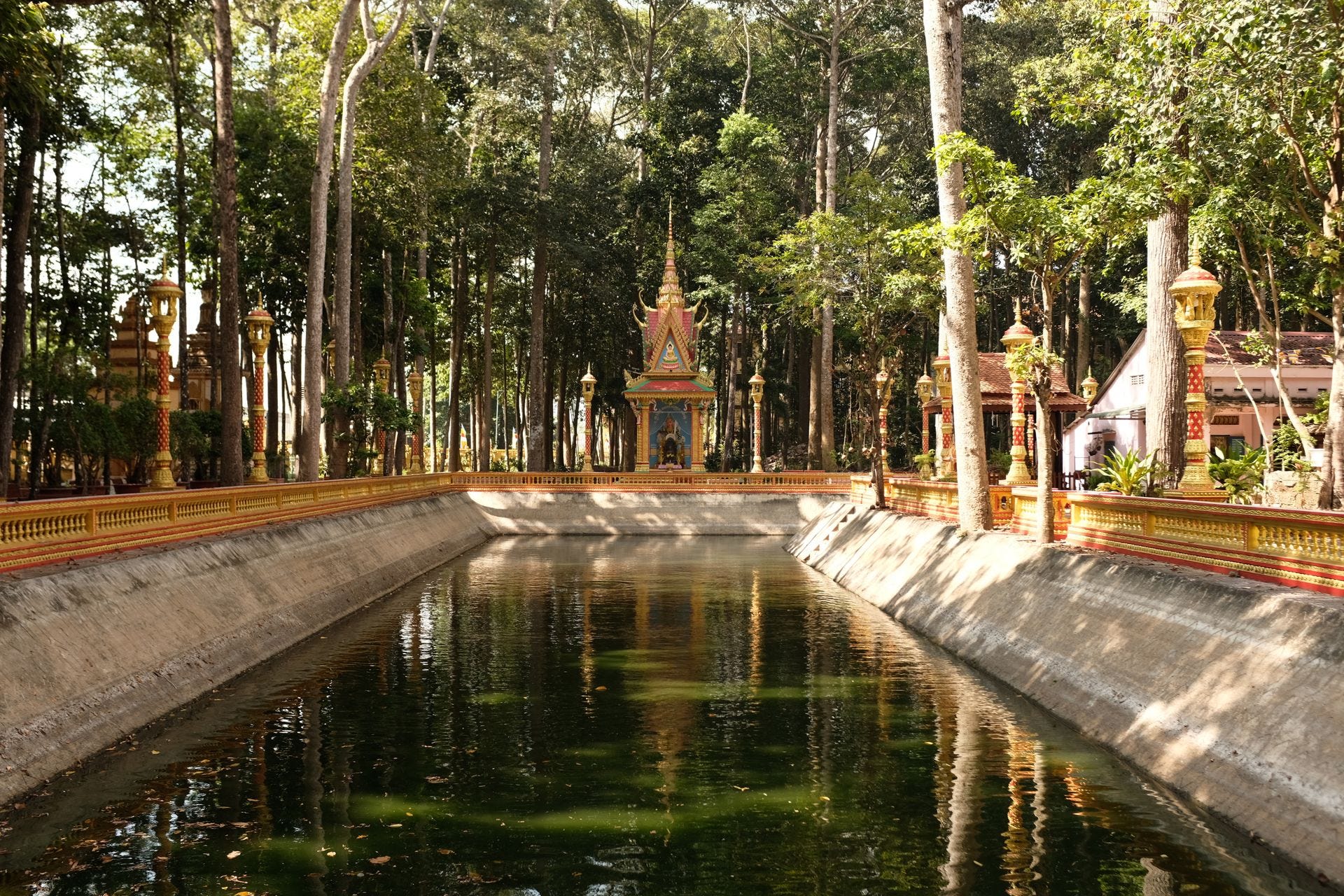
The second body, Boat, was found in the abandoned wat at the edge of the village, the one the monks had left years ago when the roof collapsed, and the Buddha’s face was stolen. He was sitting in the lotus position, which would have been funny—Boat had never sat in lotus position in his life—except that his eyes were open and his mouth was filled with mud and there were no fingernails left on his hands.
Krit was the last. Krit was the worst. Krit was found in the schoolyard, at dawn, hanging from the flagpole where the Thai flag flew every morning. The rope was the same kind used in the village’s rice mills. His tongue was black. His hands were tied behind his back with a knot that the police said was nautical, sailor’s work, the kind of knot that required practice and intention.
The village decided it was Mara before the police did.
“Look at her,” the mothers whispered in the market, their voices carrying on the hot wind. “So quiet. So still. That’s how they always are, the quiet ones. The English ones. The ones with something wrong in the blood.”
The police came to her grandmother’s house at dusk, when the light turned everything orange, and the mosquitoes rose from the paddies in clouds. There were three of them, plus a detective from Khon Kaen who spoke English with an Australian accent and kept his hat in his hands like he was at a funeral.
They asked Mara questions. Where was she on the nights Mong disappeared? On the night Boat disappeared? On the night Krit disappeared? She told them she didn’t remember. She told them she was at home, with her mother and grandmother, sleeping. They asked her mother the same questions, and Somsri gave the same answers, her voice steady and her face smooth as glass.
The detective asked to see Mara’s hands. She held them out, palms up, and he turned them over, looking at her fingernails, her knuckles, the calluses on her fingers from writing and writing and trying to learn a language that refused to fit inside her mouth.
“No defensive wounds,” he said to the other police, in Thai, thinking she couldn’t understand. “No scratches. No bruises. But she’s strong. Look at these hands. She’s been working. Rice? Something with rope.”
Mara pulled her hands back. She looked at her mother. Somsri looked at the floor.
They didn’t arrest her that night. They didn’t have enough evidence, the detective said. But they would be watching. They would be asking more questions. They would be digging in the dirt around her grandmother’s house, looking for whatever else might be buried there.
That night, after the police left and her grandmother had gone to sleep on her mat in the corner, Mara sat on the wooden steps of the house and watched the fireflies rise from the darkness. Her mother sat beside her. They didn’t touch. They didn’t speak.
The moon was nearly full, and in its light, Mara could see her hands. Not the hands the detective had examined—those were just skin and bone and the calluses of a girl learning to help her grandmother grind curry paste. No, she saw other hands. Hands that knew knots. Hands that were strong enough to twist a neck. Hands that had learned, from a very young age, exactly where to push to make a body go quiet.
She didn’t remember doing any of it. That was the strangest part. She had no memory of the irrigation ditch, the abandoned wat, the rope in the schoolyard. But she had no memory of her father’s hands, either, and she knew—knew, with a certainty that lived in her marrow—that those hands had done things far worse than murder.
Her mother lit a cigarette. Somsri had never smoked in England, not once, but here in Issan, she smoked like the other village women, cheap cigarettes that smelled of cloves and burned too fast.
“They think I did it,” Mara said. Her voice sounded strange to her own ears. Too calm. Too flat. Like her father’s voice, before the engine failed.
Her mother took a long drag. Exhaled. Watched the smoke dissolve into the night.
“Did you?”
The question hung between them, heavy and hot as the air. Mara thought about lying. She was good at lying. She had learned from the best—from her mother, who had lied to doctors and teachers and social workers for years, who had smiled at her father’s friends and said I walked into a door until the words lost all meaning.
But lying required effort. And Mara was tired. Tired in her bones, in her blood, in the very shape of her body.
“I don’t know,” she said, and it was the truest thing she’d ever spoken.
Her mother nodded slowly. She stubbed out her cigarette on the wooden step, leaving a small black scar. Then she turned to look at her daughter—really look, the way she hadn’t looked since that night at Gatwick, when she’d checked Mara’s passport and her tickets and her face in the fluorescent light of the departure lounge.
“I know,” Somsri said.
Mara waited.
Her mother reached out and took one of those strange, strong hands in her own. She turned it over, the way the detective had, but where he had seen evidence, she saw something else. Something older. Something that had crossed an ocean and taken root in foreign soil.
“Like father,” Somsri said, stroking the calluses on her daughter’s palm, “like daughter.”
The fireflies rose. The dog slept. And somewhere in the darkness, in the irrigation ditches or the abandoned wat or the schoolyard where the flag still hung, something that had been buried began to breathe again.
The END
An new anthology packed with short stories coming soon - but first, try this one:
You have a way of creating characters that get under the reader's skin. Mara is the latest example. She has another story or two in her, I reckon. You're so good with female characters.
It makes me wonder about Mara's father. What did he say to her mother?