

The Call Was Waiting!
A short dark story, set in Thailand

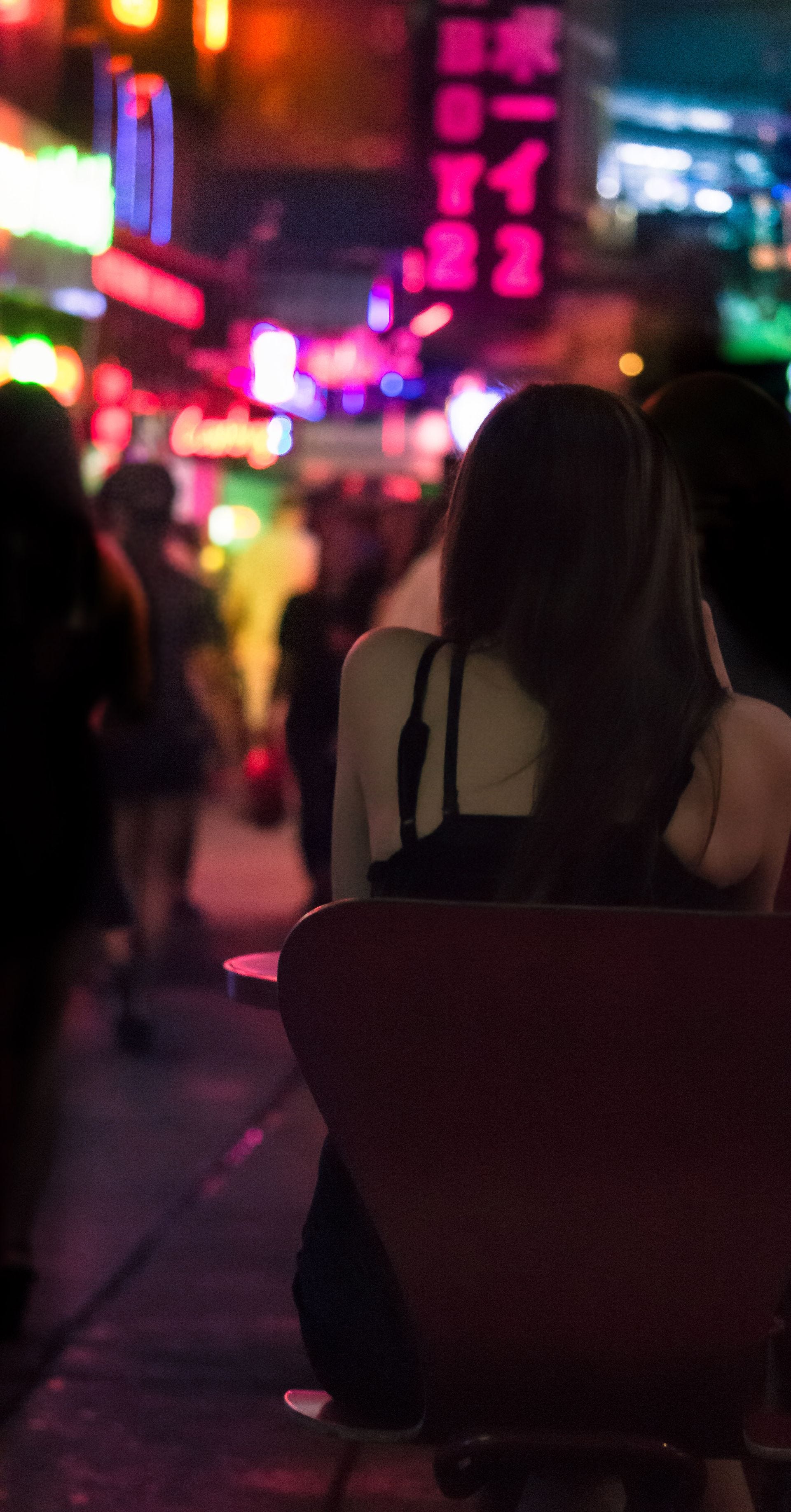
The air in the Soi Cowboy bar was a thick, sweet fog of cheap perfume, stale beer, and desperation. It clung to the back of the throat, a taste that was part of the price of admission. Jack Harrison, a man whose fifty-two years were written in the deep lines around his eyes and the permanent slump of his shoulders, nursed a bottle of Chang. It was his third, or maybe his fifth. The details of the evening were already beginning to blur at the edges, like a photograph left out in the Bangkok rain.
He was a ghost in a place full of them. Expats, tourists, and the working girls, all drifting in the neon-lit purgatory between one drink and the next. He was here for the same reason everyone was: to forget. Forget the failed business back in the UK, the divorce, the children who no longer returned his calls. It was easier here, where the only currency was the present tense, measured in the clinking of ice and the practised, hollow smiles of the women who perched on barstools, hunting for the next man.
He’d barely noticed the girl who had slid onto the stool beside him. She was younger than the others, with an unsettling stillness to her. Her smile was the same, a mechanical curve of her lips, but her eyes were flat, black pearls that reflected the strobing disco lights but gave nothing back. Her name, she said, was Fah, which meant ‘sky’. Jack thought it was a poor fit. Her clothes were dark, more functional than the sequined dresses and short shorts of the other girls. She wore a simple black t-shirt and jeans, a stark, almost funereal contrast to the explosion of colour around them.
He bought her a drink, a tequila sunrise, and she accepted it with a polite nod. She didn’t drink it. She just sat there, her gaze occasionally flickering to the door or the far corner of the bar. She was waiting, but not for him. Jack, too drunk and too lonely to care, talked. He talked about his ex-wife, about the rainy streets of Manchester, about a dog he’d had as a boy. Fah listened, but her stillness was unnerving. It was the stillness of a reptile, a creature that could remain immobile for hours, conserving energy, waiting for the precise moment to strike.
“You’re not like the others,” he slurred, his words thick and clumsy.
“No,” she agreed, her voice a soft, almost inaudible whisper. “I am not.”
Suddenly, the cacophony of the bar seemed to dim. The pounding techno music became a distant throb. Jack blinked, feeling a wave of dizziness wash over him. The busy bar was a dreamscape. Through the haze, he saw a group of men in the corner. They were all Thai, dressed in expensive, dark suits. They weren’t drinking. Their table was bare of bottles or glasses. They just sat, their faces impassive, their eyes fixed on Fah. Their hands were folded in front of them, and the air around them seemed to shimmer with a cold, menacing pressure. The other patrons seemed to be giving them a wide berth, their laughter dying in their throats as they passed by.
A cold dread trickled down Jack’s spine. He didn’t know who they were or what they wanted, but the primal part of his brain, dulled by alcohol but not dead, screamed danger. He fumbled for his wallet, desperate to leave.
He put some baht on the counter, his hands trembling. He was about to get up when the bar’s manager, a slick, nervous man in a too-tight shirt, appeared behind the bar. He wiped the counter with a rag that was already filthy, not meeting Jack’s eyes. He looked at Fah, a flicker of pure, unadulterated fear passing over his face. He leaned in, his voice a tight whisper that cut through the noise.
“Last call,” he said, his gaze fixed on her.
The words were meaningless. In a Soi Cowboy bar, there was no last call. The bars stayed open until the police made them close, often well past dawn. But the moment the words left the manager’s lips, the entire bar seemed to freeze.
The music stopped with a discordant screech. The other customers, the girls, the waitstaff—they all became statues. The only sound was the low, ambient hum of the city’s electricity, a sound like a distant, trapped scream. Fah slowly turned her head, her flat, dark eyes meeting the manager’s. She didn’t speak, but he flinched as if she had screamed in his face. He practically fell over himself backing away.
Fah turned to Jack. For the first time, a genuine expression crossed her face. It was one of cold, terrifying pity. “It is time for us to go,” she whispered. “You are coming with me.”
Jack tried to speak, to protest, but his voice was gone. The alcohol in his system had become a dead weight, pinning him to the stool. He was a marionette whose strings had been severed. Fah stood up, her movements fluid and silent. She took his hand. Her skin was cold, impossibly cold. It felt like grasping a river stone in the dead of winter.
He tried to resist, to pull his hand away, but he was powerless. He was being pulled, his will a mere whisper against her silent, immense strength. The darkness of the bar seemed to deepen, gathering around them like a cloak. As they shuffled past the table of men in suits, Jack saw their faces clearly for the first time. They were identical, like grim-faced triplets, their eyes devoid of any light. The only sign of life was a slow, deliberate blink from one of them. They didn’t try to stop them. They simply watched, their presence a silent acknowledgement of something Jack couldn’t comprehend.
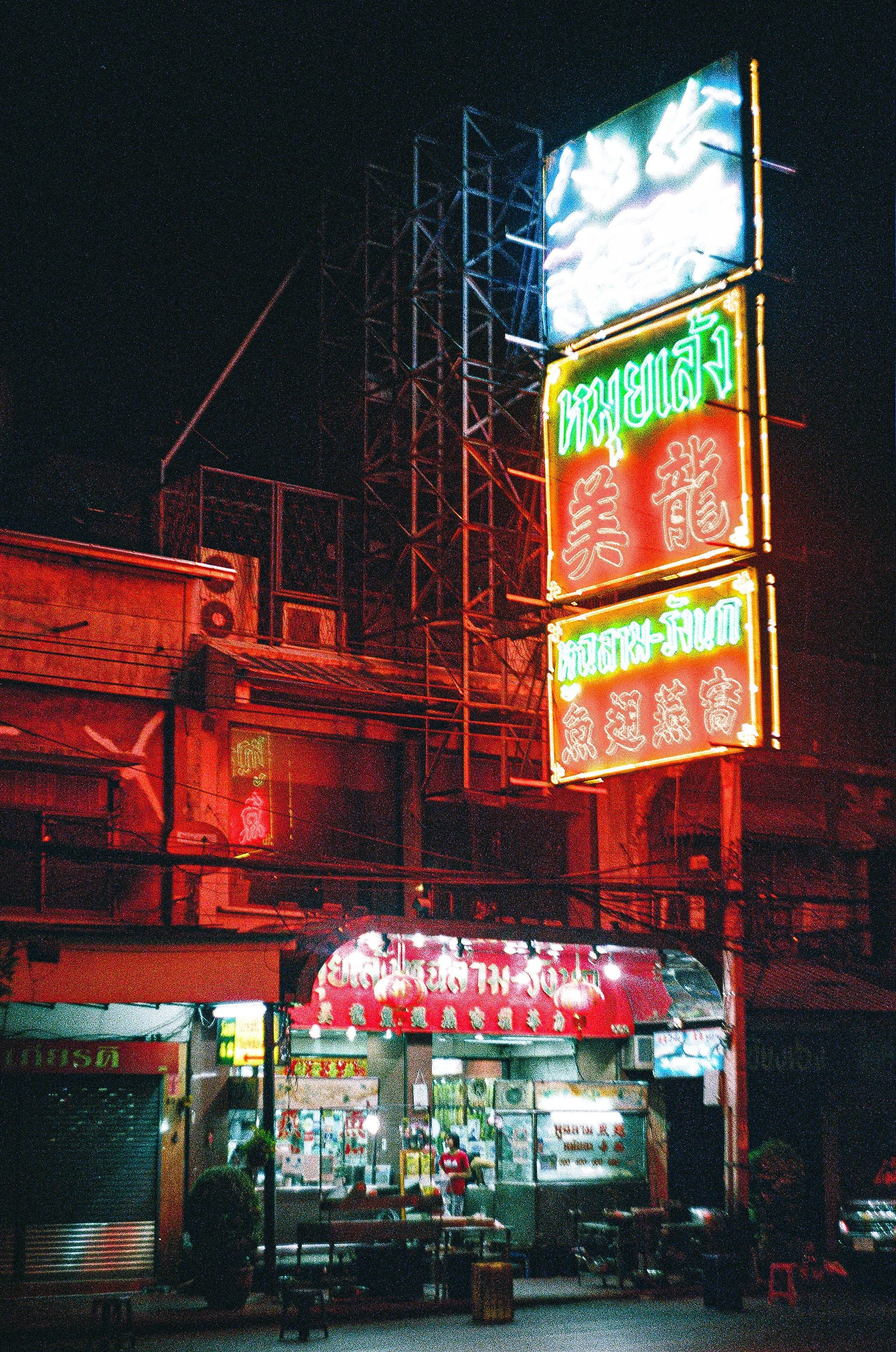
The night air outside was a shock to his system. The street was empty, the neon lights of the bars glaring into the blackness. There was no traffic, no tuk-tuks, no stray dogs. The city, the most chaotic and crowded city in the world, was utterly silent. It was as if they had stepped into a vacuum, a pocket of reality where only he and this terrifying girl existed.
Her grip on his hand was like iron. He tried to look back at the bar, but she pulled him forward. “Do not look back,” she murmured, the whisper unnaturally loud in the dead air. “It is not for your eyes to see.”
He obeyed, unable to do anything else. They walked, but he couldn’t tell where they were going. The familiar landmarks of the red-light district were gone, replaced by dark, anonymous alleyways. The smell of the canal, a pungent mix of sewage and rotting flowers, was overpowering. The city he knew had become a maze, a labyrinth of fear.
They entered a building. It was an old, decaying structure, the kind that had been abandoned long before the high-rises and shopping malls. The walls were stained with damp, and the air was thick with the smell of mildew and damp earth. Fah led him up a flight of concrete stairs, her footsteps making no sound. His own were clumsy, echoing loudly in the oppressive silence. Each step felt like a violation.
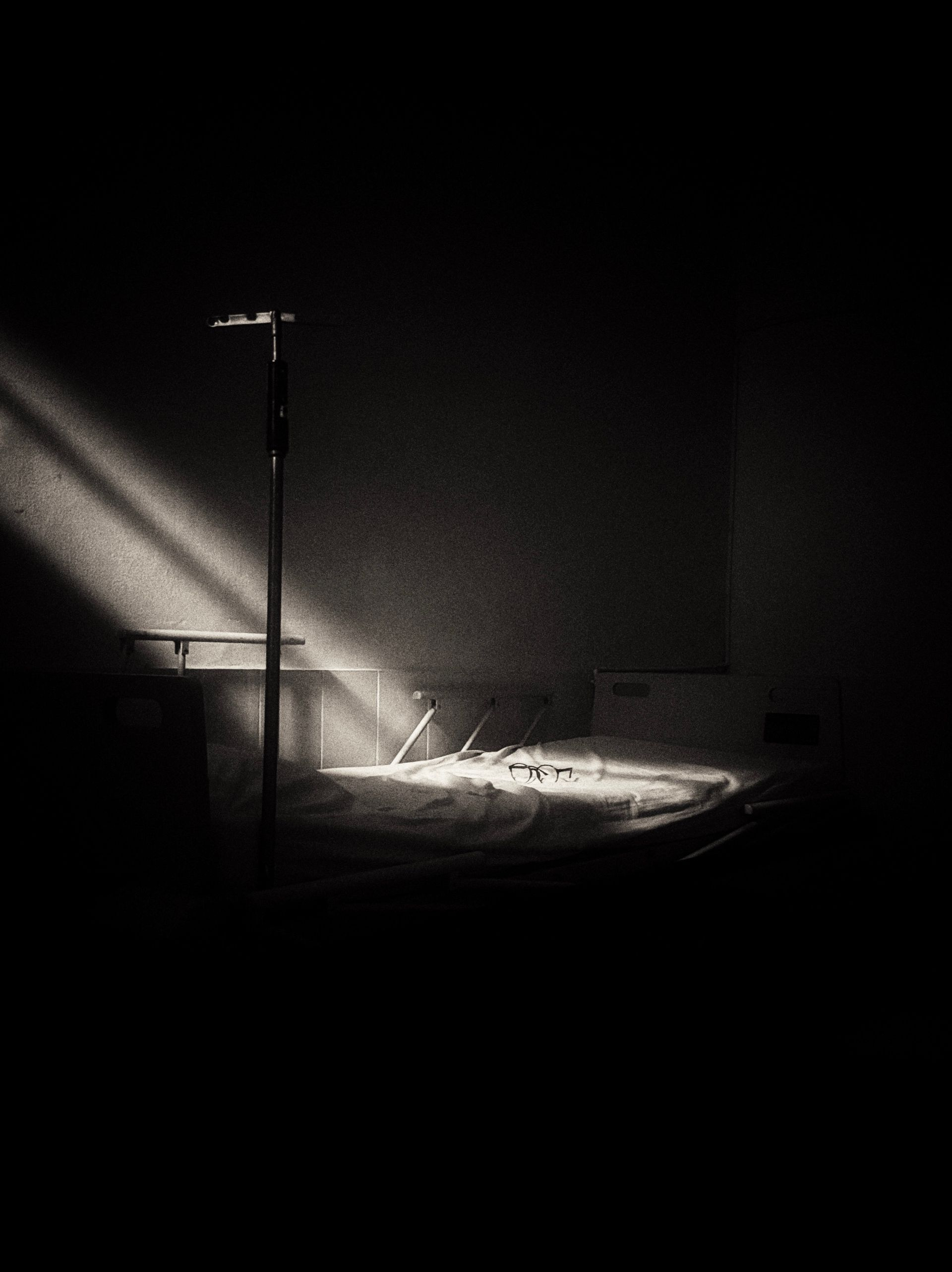
She opened a door on the top floor. They were in a hospital room. It was pristine, impossibly clean, a sterile white cube in the middle of the decay. A single, bare bed was in the centre of the room, its white sheets stark against the grey floor. A heart monitor sat beside it, its screen blank. An IV stand stood ready, its line empty. It looked like a stage set, waiting for the final scene. A single fluorescent light flickered overhead, casting a sickly, pulsating glow.
“Why are we here?” Jack finally managed to choke out, his voice a ragged whisper.
Fah released his hand and walked to the window. The view was of Bangkok, but it was a Bangkok he didn’t recognise. The city was a vast, sprawling darkness, punctuated by the sickly orange glow of a few distant fires. There were no twinkling lights, no bustling streets, just the black silhouette of the city against a starless, velvet sky.
“This is where you will see,” she said, her back to him. “This is where you will understand.”
“Understand what?” he cried, his fear turning to a desperate, manic anger. “Who are you? Who were those men in the bar?”
She turned to face him, and in the flickering light, her features seemed to shift. The illusion of a young girl fell away, replaced by something older, something that had existed long before the city. Her eyes were no longer black pearls, but bottomless pits. In their depths, he saw a flicker of fire, a sense of immense, unholy hunger.
“You call her,” she said, her voice a low, grinding vibration. “You call the Nang Tani.”
The words hit him like a physical blow. Nang Tani. The Ghost of the Banana Tree. A piece of local folklore he’d heard his driver mention once, a joke about a vengeful spirit of the forests—a silly superstition.
“That’s just a story,” he stammered, backing away from her. His legs hit the edge of the bed.
“It is no story,” she hissed, her form starting to become translucent, a shimmering, distorted image of a young woman. The air around her grew cold, so cold his breath came out in puffs of steam. “You sit in my home. You drink my water, you eat my fruit. You foul my roots with your filth and your desperation. You build your neon towers on the land where I was born. And you never give thanks. You never make an offering. You are a blight.”
Jack was crying now, hot, useless tears streaming down his cheeks. He was trapped. He couldn’t get past her. The door was a solid wall of unyielding wood. “I’m sorry,” he pleaded. “I’m sorry! I didn’t mean any harm. I’m just… I’m just a lost man.”
A sound came from the corridor. It was a low, rhythmic thumping, like a heavy, wet object being dragged down the hallway. It was the men from the bar. The sound grew louder, closer, until it stopped right outside the door. The handle began to turn.
“They were my guardians,” Fah said, her voice now a chorus of whispers, echoing from all corners of the room. “Their souls were offered to me long ago. They were lost men, too. Now they serve.”
The door swung open. The three men in suits stood there, their faces as impassive as before. But their presence now was suffocating. The air in the room grew thick, heavy, and the awful stench of rotting meat filled Jack’s nostrils. They stepped forward and flanked the bed, their shadowy forms blotting out the flickering light.
Fah glided to the foot of the bed. The fluorescent light above her head flickered violently and died, plunging them into near-total darkness. The only illumination came from the men, a faint, sickly-green luminescence that emanated from their very skin.
“You men come here to forget,” Fah’s voice hissed from the shadows. “You drink your poison, you fill your heads with your noise, and you believe you can escape. But there is no escape from the land. The land remembers. The land demands its due.”
Jack could feel a cold pressure on his chest, as if an invisible weight was crushing him. He couldn’t breathe. He tried to scream, but only a wheezing, reedy sigh escaped his lips.
“Death is not an escape,” she whispered, her face suddenly inches from his. Her skin was smooth and cold, the colour of porcelain. Her breath smelled of earth and decay. “It is only a different kind of thirst. You will serve me now. You will join them. You will wander this land for an eternity, a hollowed-out vessel, whispering my name to the lost, the lonely, and the damned.”
The three men moved as one. They each took one of his arms and placed a heavy, cold hand on his forehead. He felt a jolt of pure, agonising energy surge through him. It was like being set on fire from the inside out, his soul being ripped from his flesh. His vision swam, and he saw a flash of ancient forests, of battles, of beautiful women who were not women at all. He saw the city being built, its foundations cracking, and the land beneath it weeping blood.
As the blackness consumed him, the last thing he saw was the heart monitor on the bedside table. It had flickered to life. A single, flat green line, and above it, the words ‘Last Call’ blazed in blood-red letters. It was not the call for another drink. It was the final, irrevocable summons to join the ranks of the damned.
Jack Harrison’s body was found the next morning in an abandoned building off Sukhumvit. The police report listed the cause of death as a massive heart attack, exacerbated by severe alcohol intoxication. He was just another forgotten farang, his death a minor statistic in the city’s relentless machinery.
But the two young backpackers who were later walking through a quiet market on the outskirts of the city would tell a different story. They saw a tall, grey-faced man in a shabby suit walking in circles near an old, gnarled banana tree. His eyes were empty, his mouth hanging open, and a faint, pathetic whimpering sound escaped his lips.
One of them, a brave, stupid boy, approached him. “Hey, mate, are you okay? You look lost.”
The man’s head snapped towards him. His face was a mask of abject terror, his skin stretched taut over the bone. He opened his mouth, but instead of words, a low, dry, scraping sound came out. It was the sound of a soul weeping—the sound of someone who has been given a final chance and failed.

And then, from the banana tree itself, came a voice. It was a soft, feminine whisper, carried on the hot, fetid air. It was a whisper that promised the end of all things, a whisper that was the very essence of a final call.
“Last call.”
The boys ran. They didn’t stop running until they were back in the crowded, noisy streets of the tourist district, where the neon lights burned bright and the music blared, and they could pretend they hadn’t heard it. But they had. They had heard the call. And like Jack, they knew, deep down, that the land was waiting. It was always waiting.
The END
Have a look at Payhip - you can find more stories:
This week’s free story:
Scary and urgent!
Mother Earth will collect her due.
Enjoyed this piece!