

The Bone Thread
A short dark story, set in Thailand


The bar was called Lamplight, which was a lie. The only light came from a single fluorescent tube above the cash register, flickering like a dying insect. Bangkok’s lower Sukhumvit crawled with such places—places where the air tasted of cheap whiskey and cheaper dreams.
Zara had been in Thailand for three days. She sat on a cracked vinyl stool, nursing a Singha beer she didn’t want, watching a woman named Fah work the room. Fah was forty-two with the eyes of a sixty-year-old and a smile that had seen everything twice. She wore a red dress that had been mended at the shoulder, for the third time.
Zara had met her two hours ago, in a different bar, on a different soi. She had paid Fah five thousand baht to talk.
“You don’t want a lady?” Fah had asked, confused. “You want a story?”
“I want a name,” Zara said.
“Why ask me?”
“I read about you, and this bar on TikTok.”
“Oh, the drunken tourist?”
Now, in the Lamplight, Fah was chain-smoking Marlboro Reds and staring at the condensation on her glass. The bar was nearly empty. A German man was asleep in the corner, his head on the table. The bartender was watching a soap opera on a phone behind the counter.
“I tell you,” Fah said slowly, “this man is not for a farang girl. He is for Thai people who have no other way. You understand? Desperate people.”
“I’m desperate,” Zara said.
Fah looked at her. Really looked at the dark circles under Zara’s eyes. At the thin gold chain around her neck—the one her ex-boyfriend had given her, the one she hadn’t been able to take off despite the months of therapy, the months of sleeping with a knife under her pillow, the months of watching his Instagram feed fill with photos of a woman named Chloe in a cottage in Cornwall.
“Your boyfriend,” Fah said. Not a question.
“Ex.”
“He hurt you.”
“He left me.” Zara’s voice was flat. “After seven years. He took the deposit on the flat, the car, and the dog. He told me I was too much. Too sad. Too loud. Too everything.” She laughed, a dry scrape. “Then he moved someone else into the bed where I used to sleep.”
Fah lit another cigarette. “You want him to love you again?”
“No.” Zara leaned forward. Her eyes caught the flicker of the fluorescent tube and held it. “I want him to die.”
Silence. The German snored. The bartender’s soap opera played a melodramatic chord.
Fah exhaled smoke through her nostrils. “You are serious.”
“I flew fourteen hours to have this conversation.”
Fah crushed her cigarette into an ashtray that hadn’t been emptied in days. She looked around the bar, then back at Zara. When she spoke, her voice was lower, almost a whisper.
“There is a man. He used to be a monk. In the north. Near the border with Myanmar, in the province of Mae Hong Son. He was ordained for twenty years. Very respected. Then he left the temple. The story is that he discovered something in the old palm-leaf manuscripts—something the senior monks wanted to keep hidden. A kind of magic. Not the gentle kind. The kind that makes knots in the soul.”
Zara didn’t blink.
“He lives alone now,” Fah continued. “In the jungle, on a hill they call Khao Taen—the Bone Hill. He doesn’t see many people. But if you find him and bring him the right payment, he can… adjust things. He can make a person love you. Or hate you. Or forget how to breathe.”
“How do I find him?”
Fah shook her head. “The jungle is not like Bangkok. You cannot take a taxi. You will need a guide to take you to the village at the base of the hill. But no guide will go up to his hut. They are afraid of him.”
“I’m not afraid.”
“You should be.”
Zara finished her beer. “Where do I find the guide?”
Three days later, Zara stood at the edge of a village that didn’t appear on any map. She had taken a night bus to Mae Hong Son, then a songthaew to a market town so small it consisted of a single gasoline pump and a sleeping dog. From there, a man named Somsak—toothless, cheerful, paid triple—had driven her on the back of a motorcycle for two hours over rutted dirt roads.
The village consisted of twelve bamboo houses on stilts, a well, and a wizened headman who looked at Zara as if she had arrived from the moon.
Somsak translated. Yes, they knew the old ex-monk. No, they would not take her up the hill. Yes, there was a path. No, they would not give her a torch after dark. Yes, people had gone up before. Some had come back. Some had not.
“What happened to the ones who didn’t come back?” Zara asked.
Somsak spoke to the headman. The headman said three words. Somsak’s face went pale.
“He says they never left.”
Zara bought a bag of sticky rice, a bottle of water, and a cheap flashlight from the village’s single shop. Then she started walking.
The path was barely a path—a slash through the elephant grass, a scar of mud between the great teak trees. The air was thick and wet, and the sounds of the jungle pressed against her from all sides—the sawing of cicadas, the cough of some unseen bird, the constant dripping of water from leaves that had never known a dry season.
She walked for two hours. The sun began to set, turning the sky the colour of a bruise. She turned on the flashlight. The beam cut a trembling circle through the darkness, picking out roots and rocks and the occasional spiderweb strung between branches like a silk trap.
Then she saw the light.
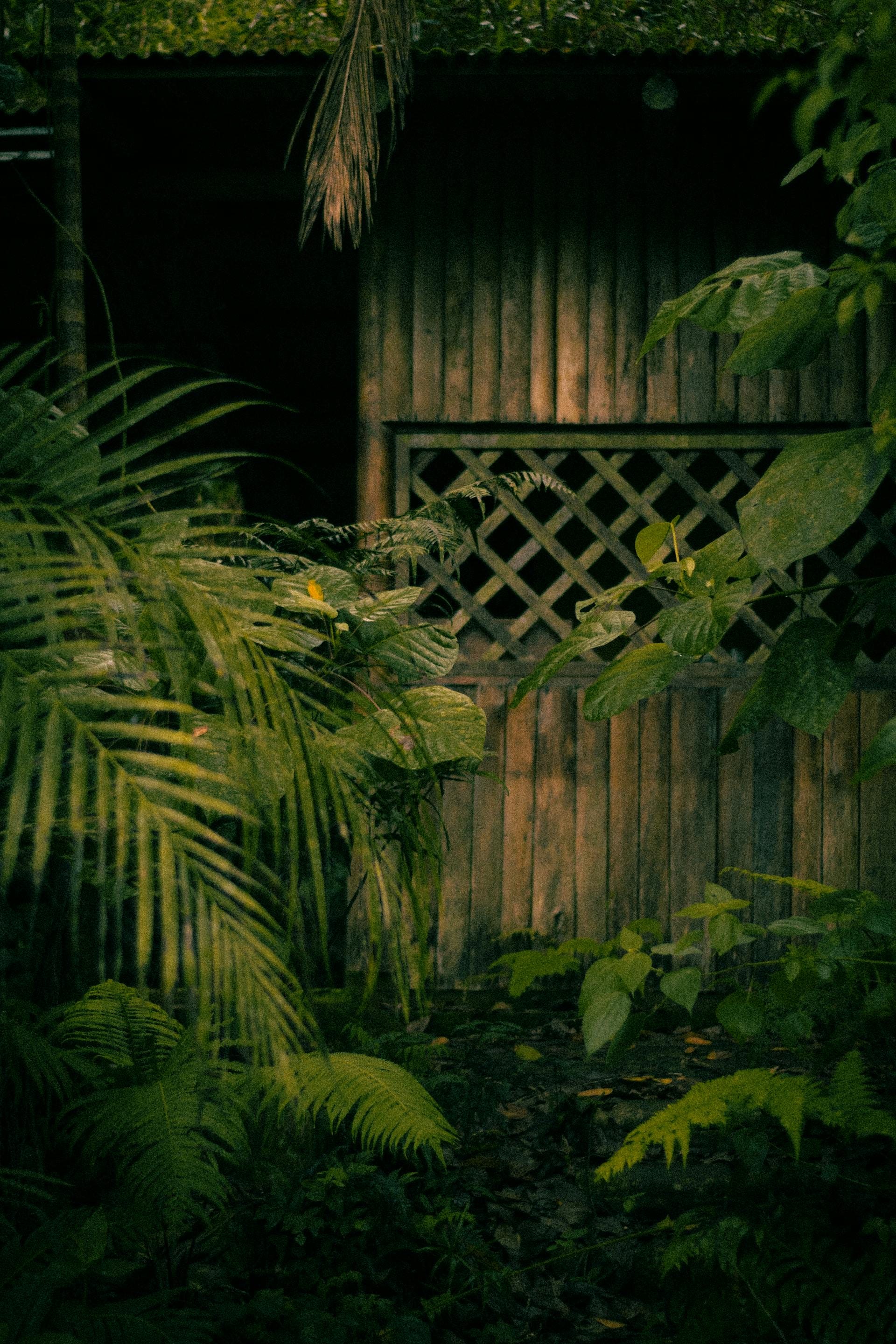
It was a single oil lamp, burning in a window. The hut was small, built of weathered wood and corrugated iron, perched on the crest of the hill like a skull on a stake. A staircase of uneven planks led up to a door that hung slightly ajar.
Zara climbed the stairs. Her heart was beating fast, but her hands were steady. She had come too far to feel fear now.
She pushed the door open.
The room inside was small and spare. A bamboo mat on the floor. A shelf with a few bowls. A photograph of a monk—younger, smiling, maybe the old man himself. And in the corner, sitting cross-legged on a worn cushion, was a figure wrapped in a stained saffron robe.
He was old. Not the old that suggests wisdom. The old that suggests something has been left in the sun too long. His skin was the colour of teak bark, stretched tight over bones that seemed too sharp. His eyes were closed. His hands rested on his knees, palms up, as if waiting for something to be placed in them.
Zara cleared her throat. “I was told you could help me.”
The old man did not move. Did not open his eyes.
“You are the farang girl,” he said. His voice was dry and soft, like leaves being crushed. “The one who wants her lover to die.”
Zara’s blood chilled. “How do you know that?”
“The jungle tells me things. The wind. The ants. The bones of the hill.” He opened his eyes. They were not the eyes of an old man. They were black, utterly black, without iris or white, like two holes bored into the back of his skull. “Sit.”
She sat. The bamboo mat was cold.
“You have come a long way to ask for a death,” he said. “Most people who come here ask for love. A woman who wants her husband to stop beating her. A man who wants his neighbour’s wife to look at him. Small things. Pathetic things.” He tilted his head. “You want something larger.”
“I want him dead,” Zara said. “His name is James. He lives in London with a woman named Chloe. He ruined my life. He made me believe I was nothing. And then he left. I want him to feel what I felt. The falling. The silence at the bottom.”
The old ex-monk smiled. His teeth were stained red from betel nut. “You want justice.”
“I want revenge.”
“Justice. Revenge. Two sides of the same flawed coin.” He reached into the folds of his robe and brought out a small object. A needle. Not metal—bone. Carved from something small and sharp. A fish spine, perhaps. Or a cat’s whisker. “I can do this for you. But the price is not money.”
“I have money.”
“I have no use for money.” He held up the bone needle. It caught the light of the oil lamp and seemed to drink it. “The magic I practice is old. Older than Buddhism. Older than this country. It comes from the time when people knew that love and death are the same thing—a thread pulled through the body, tied at one end to the heart and at the other to the grave.”
“What is the price?”
The old man’s black eyes fixed on her. “You must give me something you love. Not a thing. A memory. A piece of yourself. The magic requires a substitution. A life for a life. But not just any life. A piece of your own soul, cut out and traded.”
Zara hesitated. But only for a moment. “Take whatever you want.”
“Bold,” he said. “Or foolish. We will see which.” He set the bone needle down on the mat between them. Then he closed his eyes again and began to chant. The words were not Thai. They were older. They sounded like rocks grinding together at the bottom of the sea.
The lamp flickered. The shadows in the corners of the room began to move, not like shadows but like things that had been waiting. Zara felt a cold hand press against the inside of her chest—not on her skin, but inside, as if someone had reached through her ribs and placed a palm against her heart.
She gasped. Her vision swam.
When she could see again, the older man was holding something. A small, glowing thread, maybe the length of her finger, pulsing with a soft blue light. It looked like a vein pulled from a fish. It looked like a nerve.
“This is the memory of the first time he told you he loved you,” the old man said. “You were in a park. It was autumn. There was a red bench. He held your hand and said your name like it was the only word he knew.”
Zara’s eyes filled with tears. She had forgotten that memory. Or she had tried to. Now it was gone—not forgotten, but extracted, drawn out like poison from a wound. She could feel the hollow where it had been—a small, cold cavity behind her sternum.
“Take it,” she whispered. “Kill him.”
The old man placed the glowing thread into a small clay bowl. He covered it with a piece of black cloth. Then he took the bone needle and pricked his own thumb. A bead of dark blood welled up.
“The spell requires three nights,” he said. “On the first night, he will dream of drowning. On the second night, he will forget how to swallow. On the third night, his heart will tie itself into a knot, and he will die in his sleep. There will be no autopsy, no suspicion. Just a man who stopped breathing for no reason.”
“And the price?” Zara asked. “You already took the memory.”
The old man smiled again, wider this time. “That was only the beginning. The true price will be collected after he dies. You will feel it. A piece of you that falls away and does not grow back. You will not know what it was until it is gone. And you will spend the rest of your life trying to remember.”
Zara stood. Her legs shook, but her resolve did not. “Do it.”
The old man nodded. He took the bone needle and began to sew the black cloth over the clay bowl, stitching it shut with invisible thread. As he worked, he spoke a single sentence in that ancient language, and the lamp went out.
The darkness was absolute.
When the lamp lit itself a moment later, the old man was alone. The farang girl was gone. She would find herself at the bottom of the hill, standing on the path, with no memory of how she got there—only a hollow in her chest and a name on her lips.
James.
Three nights later, in a flat in Brixton, a man named James Holt went to sleep with his arm around a woman named Chloe. He dreamed of water—black water, rising past his ankles, his knees, his waist. He woke gasping at 3 a.m., his throat tight, his hands clawing at the sheets. Chloe slept on.
The next night, he could not swallow his dinner. The pasta sat in his mouth like wet cardboard. He drank water and choked. He went to bed hungry, his throat constricted, a low hum of panic vibrating in his chest.
On the third night, he lay awake, staring at the ceiling, feeling his heart beat in a rhythm that was not quite right. Lub-dub. Lub-dub. Then a stutter. Then a skip. Then—
Chloe found him in the morning. His eyes were open. His face was peaceful. The coroner would call it sudden arrhythmic death syndrome. A tragedy. A mystery.
Three thousand miles away, in a guesthouse in Chiang Mai, Zara felt something break inside her. She was eating breakfast—a bowl of khao tom, a soft-boiled egg—when a piece of her fell away. She didn’t know what it was. The ability to feel joy? The memory of her mother’s face? The part of her that had once believed in happy endings?
She sat at the plastic table, the spoon halfway to her mouth, and she wept. Not for James. For the thing she had lost and could not name.
She would search for it for the rest of her life.
She would never find it.
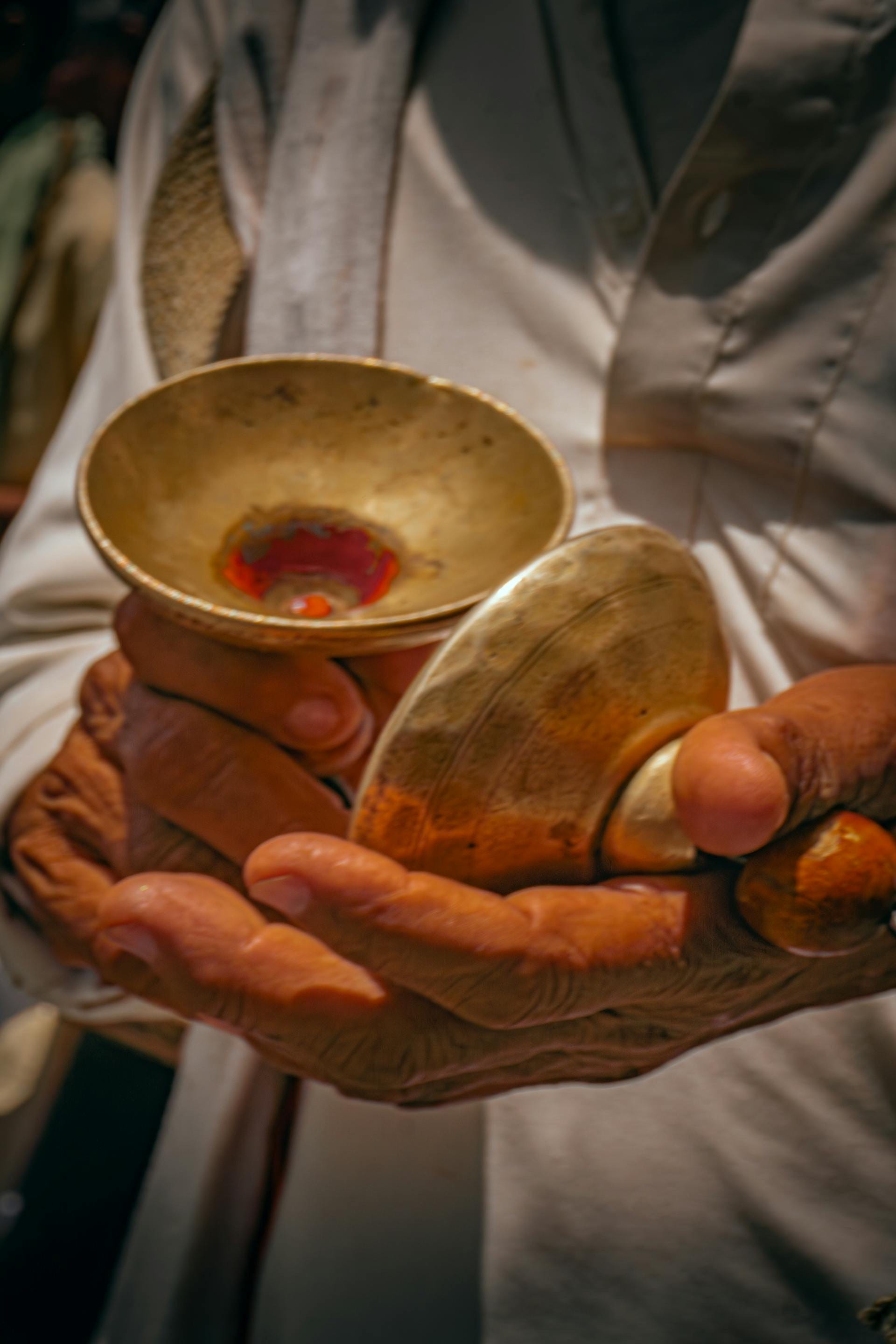
The old ex-monk sat on his cushion on the Bone Hill. The clay bowl was open now. The black cloth lay beside it, unstitched. The glowing thread was gone—absorbed into the spell, burned up in the transaction.
He picked up the bone needle and examined it. Still sharp. Still hungry.
He thought about the farang girl. He thought about the hollow he had carved in her chest. He felt nothing. Not satisfaction. Not remorse. He had stopped feeling those things many years ago, shortly after he had left the temple, shortly after he had discovered the true nature of the magic in the palm-leaf manuscripts.
The manuscripts did not teach how to kill.
They taught that killing—like loving, like breathing, like forgetting—was simply a rearrangement of the soul’s furniture. A chair moved here. A table was removed. A window opened to a darker view.
He had been a monk once. He had believed in compassion, in the sanctity of all life. Then he had learned that the Buddha himself had spoken of upaya—skilful means—the understanding that sometimes a lie was kinder than the truth, sometimes a small cruelty prevented a larger one.
The farang girl would never kill anyone again. She had given away the part of herself that could want such a thing. Or perhaps she had given away the part that could feel pleasure. Or grief. Or love. He didn’t know. He didn’t care.
The needle was patient. There would be others.
Outside his hut, the jungle breathed. Somewhere below, on the path, a dog barked—the same dog that had bitten a different farang man a thousand miles away, in a different story, the same dog that would always bite and always be killed and always be avenged by an old woman’s prayer.
The old ex-monk blew out the lamp.
In the darkness, he smiled his red-toothed smile.
Somewhere in London, a dead man’s phone buzzed with a text from a number that no longer existed in any living person’s contacts. The text was sent three days ago, delayed by a network error, but it has arrived now.
It said, "I hope you rot."
Chloe picked up the phone. She read the message. She did not recognise the number. She deleted it and went back to the business of mourning a man she had never really known.
On the Bone Hill, the old man slept.
And in a cheap guesthouse in Chiang Mai, Zara sat on the edge of her bed, staring at her hands, trying to remember a park, a red bench, an autumn afternoon, the sound of her own name spoken like a prayer.
The memory was gone.
What remained was a small, cold certainty: she had gotten what she wanted.
And it had cost her everything she had not known she was spending.
The END
Thai words used in this tale. Soi - lane or small street. Baht - Thai currency. Farang - foreigner. Songthaew - two-wheeled vehicle.
Would you like Still Thai Whispers, FREE!

Damn good story.
I was hooked from your first sentence. Fantastic read.