

Small wager
A short, dark story, set in Thailand


The air in the soi was a thick, greasy soup of exhaust fumes, frying garlic, and the metallic tang of Bangkok’s ever-present humidity. Inside the tiny, windowless betting den, the smell was worse—sweat, cheap whiskey, and the sour, cloying scent of fear. Somchai was drowning in it. The fluorescent lights buzzed, casting a sickly pallor on the faces of the men crammed around the single, wall-mounted television. On the screen, the World Cup was a dazzling ballet of green and white, a world away from the grimy reality of this shophouse.
“Uruguay! Pass it, you idiot!” someone screamed. The roar of the crowd from the TV was punctuated by the frantic, tinny commentary and the sharp crack of plastic glasses slamming onto makeshift tables. Somchai’s knuckles were white as he gripped the crumpled betting slip in his pocket, the receipt of his doom. He’d felt the first tremors of it that afternoon, watching the last of his wife’s Mae’s emergency fund—the money for her mother’s heart medication—torn from the family altar’s envelope. Fifty thousand baht. A number that had seemed so theoretical, so capable of quick multiplication, just hours before.
His wife, Dah, had been beautiful in her quiet, enduring way. She worked the night shift at a 7-Eleven, her hands perpetually smelling of cleaning fluid and fried chicken. Her family, poor rice farmers from Isaan, had given her to him with a simple, solemn trust. He was a Bangkok man, a driver for a delivery company, a man with city aspirations. He was supposed to be their bridge to a better life. Instead, he’d become the rope they were all hanging from.
The first few days of the tournament had been electric. He’d won small, the money seemingly growing from nothing, a magical fruit of his newfound football acumen. He’d bought Dah a new phone, the kind with a big screen, and sent a chunk of money to her mother for the farm. He felt like a king. The feeling was more addictive than the ya ba he’d occasionally seen other drivers popping. The high was pure, unadulterated power.
Now, he was a ghost haunting his own life. The losses had come like a monsoon flood, relentless and overwhelming. He’d stopped going to his delivery job, spending his days in the den, chasing the phantom of his first big win. He’d drained his own accounts, then the ‘savings’ he and Dah had meticulously set aside for a down payment on a small condo. He told her it was a secure investment, a tip from a reliable friend in the financial district. He believed the lie himself, for a time. But the final, desolate act had been the money intended for his mother-in-law.
“Two hundred thousand baht on Brazil,” a man next to him barked, slapping a thick wad of cash onto the counter. The bookie, a man with a face like a withered old coconut and eyes of polished flint, logged it without a flicker of emotion. The man who placed the bet was a businessman, his silk shirt soaked with sweat. He was a far cry from the desperate punters, the motorcycle taxi drivers with their frayed helmets, or the stallholders from the nearby market, each clutching their own slips of paper, their own poisoned chances.
Somchai felt a tremor run through him. Two hundred thousand. It was the GDP of a small village. He looked at his own slip. It was for less, but it was everything he had left. Everything he’d stolen. He’d bet on the underdog, as he always did in his desperation, on a team with long odds. He’d seen an analysis on his phone, a “sure win” predicted by a shady-looking man in a Facebook group. It was his last roll of the dice.
The match was a brutal, cagey affair. The underdog fought hard, their defence a wall of clenched teeth and desperate tackles. Somchai felt a tiny seed of hope germinate in his chest. Ten minutes left. Then a mistake. A clumsy pass, a swift counter-attack. The stadium erupted, and the world collapsed in on him. The favourite had scored. The commentator’s voice was a distant drone of triumph. The noise in the den was a deafening symphony of groans and cheers, a cacophony of human misery and glee.
The final whistle blew. Somchai’s hand trembled as he unfolded his slip. It was worthless. The ink seemed to smudge and run in the harsh light, mocking him. He felt a profound emptiness, a hollowing out of his soul. He felt not just the loss of money, but the loss of the man he had pretended to be. The husband. The provider. The son-in-law.
He walked home in a daze, the neon signs of Sukhumvit burning his eyes. The streets were full of life, a vibrant, chaotic river of people, but he was a dead man walking. The door to their tiny, one-room apartment felt heavier than usual. He turned the key, and the smell of som tam and sticky rice hit him. Dah was there, her back to him, stirring a pot. Her mother, Buapa, was sitting on the floor, her legs swollen, her face a mask of gaunt, weathered patience. And there, sitting on their only chair, was Dah’s older brother, Narong. He was a brick of a man, a truck driver who rarely spoke. When he did, his voice was a low rumble. He was staring at Somchai with an intensity that made his blood run cold.
“You’re home,” Dah said, her voice flat, drained of emotion. She didn’t turn around. Her shoulders were rigid, tense.
Somchai tried to smile. It felt like a muscle spasm. “The match… it was a close one. I almost had it. I just need one more day, one more win…”
He was babbling. He knew it.
Narong stood up slowly, deliberately. He was a head taller than Somchai, and now he seemed to fill the entire room. He held out a single, folded piece of paper. “We know about the hospital money, Somchai,” Narong rumbled. “Mae went to the pharmacy. The bill was not paid.”
Somchai’s eyes went to Buapa. She was looking at the floor, her fingers picking at the mat beneath her. The silence was a physical weight.
“I was going to tell you,” Somchai whispered. “I was going to fix it. I just needed…”
“You stole from our mother,” Narong cut him off, his voice shaking with a controlled fury. “You stole from my sister.” He unfurled the paper. It was a bank statement. An overdraft notification for Dah’s account. Somchai felt his bowels turn to water. He’d taken that, too.
Dah finally turned. Her face was streaked with silent tears, but her eyes were hard. She saw him then, not as her husband, but as a stranger—a parasite. “You told me it was for a car, the money for the condo. You told my mother it was for the rice. All of it… gone. For a football game?” Her voice cracked on the last word, a sound of utter bewilderment. “Who are you?”
There was nothing he could say. He sank to his knees. “I’ll get it back. I swear. I’ll work double shifts for a year. I’ll…”
Narong and Buapa exchanged a glance. It was a look devoid of pity. It was a look of final reckoning. Narong nodded once. He produced a smartphone, the screen showing a contact. He pressed a button and spoke in his low rumble, “He’s here.”
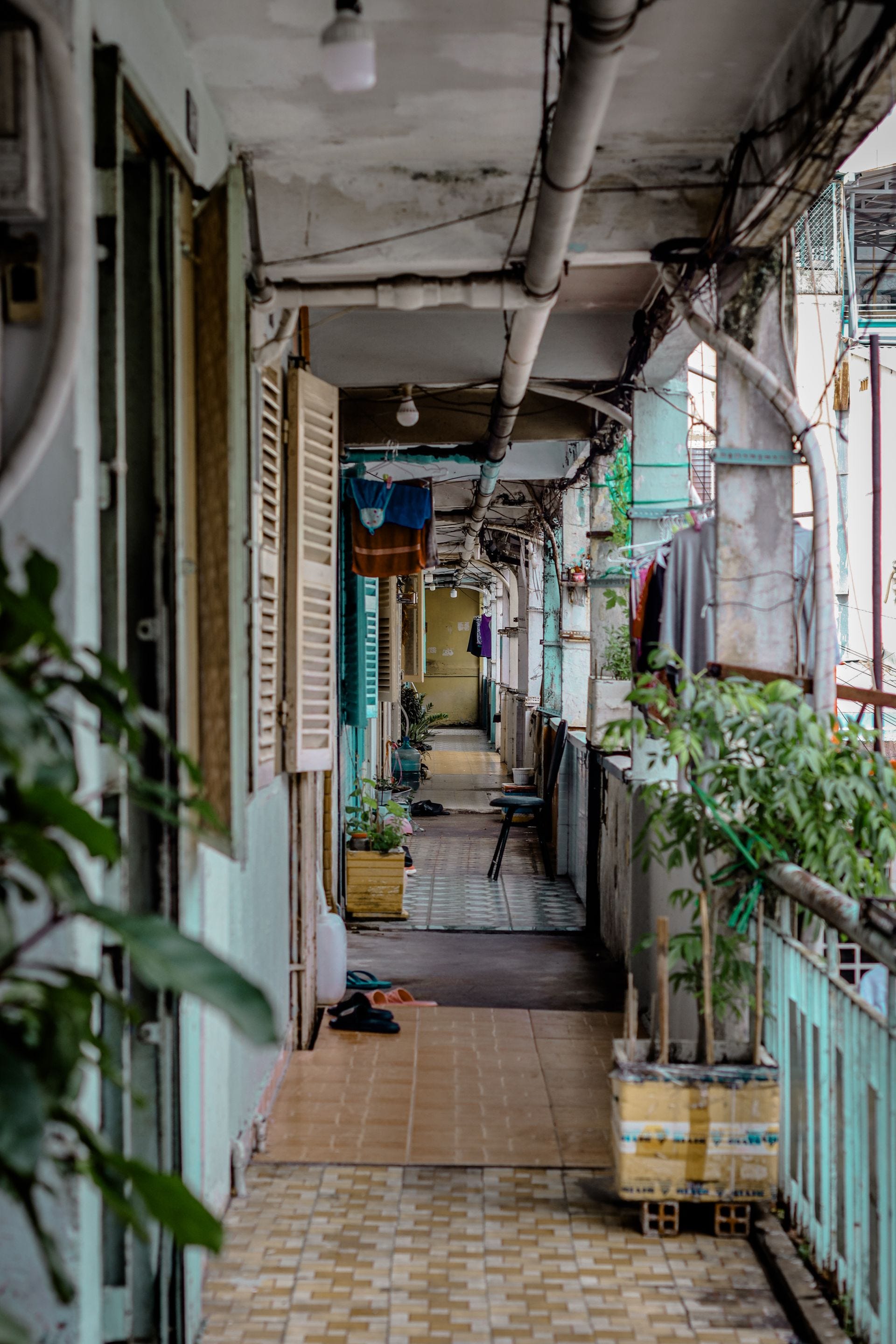
Somchai felt a spark of confusion. Who was he calling? The police? A loan shark? The idea of the latter was terrifying. Loan sharks were known for their creative and brutal methods of collecting debts. “No,” he pleaded, his voice a ragged whisper. “Don’t call the police. I can fix this. I can pay the loan sharks, give me time.”
Narong ignored him, pocketing the phone. He didn’t seem concerned about the police. He didn’t seem concerned about anything but a grim, pre-determined sense of duty.
Within twenty minutes, three men arrived. They wore casual clothes but moved with a coiled, professional energy that screamed “security services.” Their faces were expressionless. Their leader, a slim man with a gold tooth that glittered in the dim light, looked at Somchai as if he were a piece of furniture. He spoke to Narong. “You are sure?” he asked.
“He is worth the debt?” Narong replied, his voice a flat statement. He gestured to the miserable heap on the floor. “He is fit. Not too old. No visible diseases.”
The gold-toothed man smiled, and it was the most terrifying expression Somchai had ever seen. It was a smile that belonged not in a person’s face, but in a butcher’s display case. “For what he did to his own family,” he said, “he’ll be a good worker. A very motivated worker. There’s always a demand for them.”
It was then that the dawning, horrifying truth began to seep into Somchai’s panicked mind. This wasn’t about a loan. This wasn’t even about the crime. This was about a solution. He was a problem, an embarrassing, dangerous problem for a proud, low-income family. He’d brought shame and financial ruin upon them. In their world, a debt had to be paid. And if you couldn’t pay it with money, you paid with your body.
“What are you doing?!” he screamed, scrambling backwards. “You can’t! I’m family!”
Dah looked at him, and for a moment, he saw a flicker of the woman he’d once loved. It was there and gone, like a match striking in a hurricane. “No, Somchai,” she whispered, her voice so quiet it was almost lost in the hum of the air conditioner. “You’re not family anymore. You’re just a debt.”
The three men moved like shadows. One grabbed him, his grip like a vice. He struggled, kicking, swinging his arms. He managed to land a punch on one of the men’s jaws, but it felt like hitting a wall. In response, the man hit him once, in the solar plexus. All the air left his body in a silent, whooping gasp. He crumpled, a sack of useless flesh.
The last thing he saw as consciousness faded was Buapa finally looking up. Her ancient, leathery face was a mask of profound grief and sorrow, but also of a terrible, implacable logic. In her eyes, he saw the judgment of a matriarch who had seen a thousand lean seasons, a thousand ways to survive. He was not one of the survivors. A plastic bag was slipped over his head, and the world went black.
He woke up in a truck. The air was thick and stale, smelling of diesel and unwashed bodies. He was tied, his wrists bound in front of him with a coarse plastic zip tie. His head throbbed. He could hear other people in the darkness, whimpering and breathing heavily. The journey was long, the roads becoming rougher. He knew, with a sickening certainty, where he was going. He’d heard stories, rumours whispered in the seedier corners of Bangkok. Cambodia. The border. The scam farms.
The truck stopped. He was hauled out, blinking in the intense, white-hot sunlight. He was in a compound surrounded by high concrete walls topped with barbed wire. It was a prison camp masquerading as a business park. The buildings were cheap and functional. The noise was a maddening, digital cacophony: a thousand fingers pecking at keyboards, a thousand people speaking into headsets, all spinning the same lies. The air was electric with despair.
He was processed like livestock. His name was taken. His photo was taken. He was stripped of his clothes and given a cheap, uniform polo shirt and shorts. They gave him a chair, a desk, and a script. The script was a masterpiece of social engineering. It was a story about love, about a beautiful woman in Hong Kong desperate to meet a Western man, about a business deal gone wrong, about a foreign inheritance needing a trustworthy partner. It was all lies, crafted to drain bank accounts, to steal the life savings of lonely, trusting people thousands of miles away.
“You work,” the supervisor, a man with a scarred face and cold, dead eyes, explained in broken English. “You meet the target. You make them love you. You make them send money. You do not stop. You do not fail. If you fail, you don’t get food. If you cause trouble…” He gestured to a corner of the compound where a few men in the same cheap uniforms were being forced to do a brutal, pointless exercise in the baking sun, doing squats until their legs gave out. “You learn. You make us money, or we make you nothing.”
In the beginning, Somchai raged. He refused to speak. The first day, he was beaten. Not severely, just enough to hurt, to shatter his sense of defiance. The second day, they withheld food. By the third day, the phantom of his family, Dah’s tears, Buapa’s stare, became a distant, painful memory, replaced by the gnawing, immediate hunger. He picked up the phone and dialled the first number on the list. A woman’s voice answered, a kindly, elderly lady from Texas. He started to speak the words on the script, his voice flat, dead. But he realised, with a jolt, that he was good at it. He had always been a liar. He had lied to Dah, to her family. He had lied to himself. This was just a natural, horrifying extension of his nature. He spun a tale of a lonely British engineer, and within a week, the woman had wired him $2,000. He’d never seen the money. It went to the boss, the gold-toothed man who was part of a bigger network.
The days bled into each other. He ate. He slept in a dormitory full of other ghosts—debt-ridden Chinese, desperate Burmese, even a few fellow Thais who had made a similar, fatal error. He learned the rhythm of the scam factory. The constant pressure. The quotas. The fear of failure. He would hear of other workers who tried to escape. They were brought back, broken and bleeding, and used as an example.
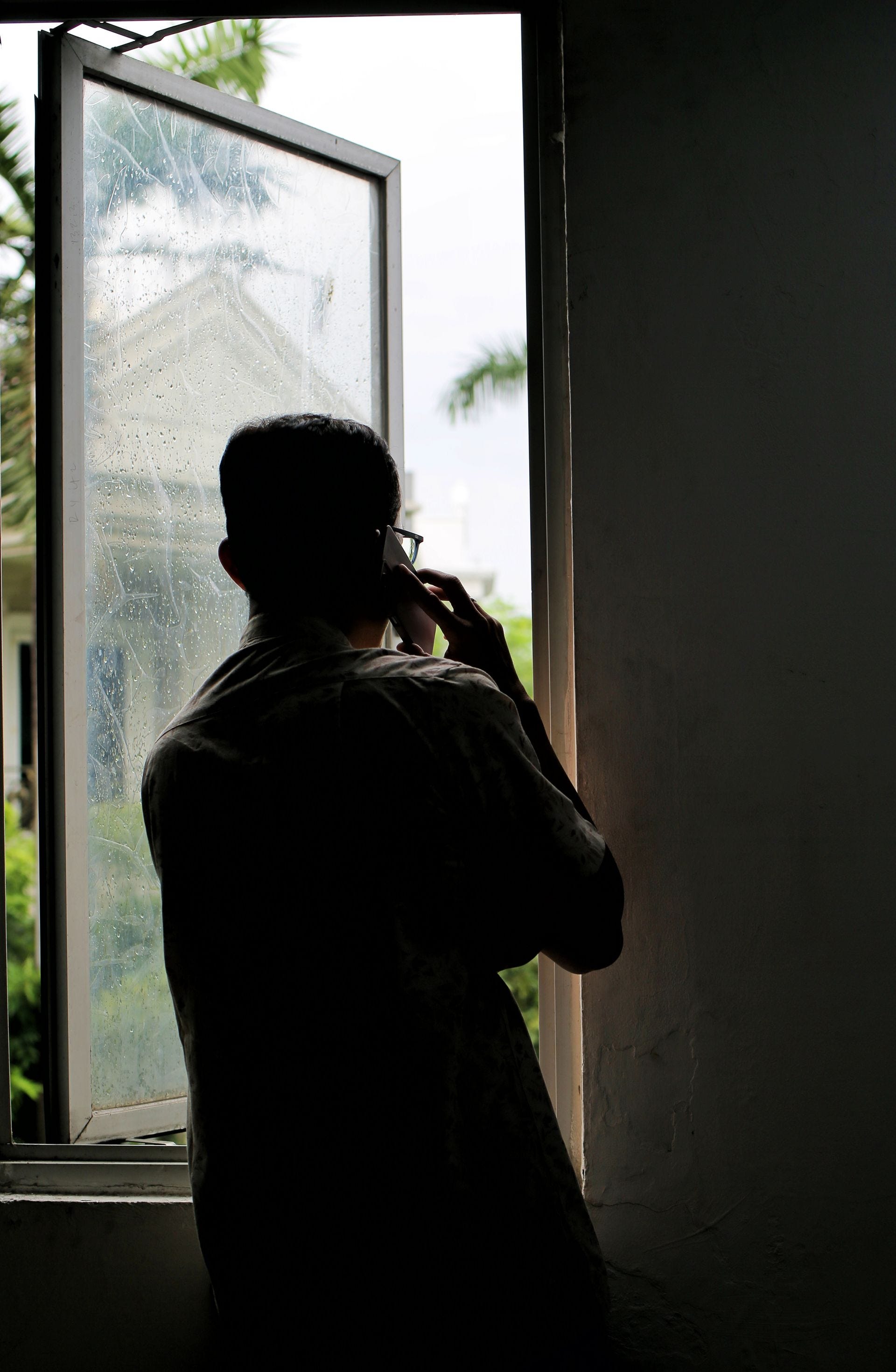
One day, he was assigned a new target. The voice on the other end of the line was a young man from New York. He was a recent graduate, full of naive hope and eager to find a partner. Somchai listened to the boy’s life story and felt a strange, detached kinship. He thought of his own naive dreams, watching those first matches on TV. The boy was building a castle in the air, and Somchai was about to be the monster who tore it down.
“You’re so interesting,” Somchai said, his voice smooth and practised, a borrowed accent on his tongue. “You have a good heart. I can tell. That’s why I know I can trust you.”
The boy laughed. “It’s nice to talk to someone who gets it. My mom, she’s always worried.”
Somchai looked out the grimy window of the call centre. Through the bars, he could see a sliver of the lush Cambodian countryside. It was a world of green and gold, a world of freedom. He gripped the phone tighter. “Don’t worry about her,” he said, a dark, cynical smile playing on his lips. “We all need to look out for ourselves.”
He thought of Buapa, her final, judgmental stare. He thought of Narong, the silent executioner. He thought of Dah, who had loved him and whom he had betrayed. They had sold him to save themselves. It was a cold, hard logic he could now finally understand. He was the problem they had eliminated. He was the bad debt they had cleared from the books. The thought, instead of filling him with rage, gave him a strange sense of peace. He had been a parasite on his own family. Now he was a parasite in a digital ecosystem, preying on strangers. He had traded one kind of ruin for another. The despair was no longer a fresh, sharp pain. It was a dull, constant ache, a part of him as natural as breathing.
His supervisor walked by, a menacing shadow. He slammed a piece of paper on Somchai’s desk: a new name, a new picture, a new story. Somchai didn’t even look at it. He just nodded. He picked up the phone. He dialled a new number, the cycle of greed and misery repeating itself once more. The game was the same. The only difference was that now the World Cup existed only as a faint, flickering memory of a world he had lost, a world where he had been a free man who had chosen to destroy himself. In this new world, there were no teams, no wins, no losses. There was only the next call, the next lie, and the relentless, grinding machinery of survival.
The END
Grab a FREE book!

Great story 👍
Another engaging read about a world I do not know. Thank you.