

Pet My Pet
A short dark story, set in Thailand

The air in the village was thick, a wet blanket of heat that clung to the skin and made the very act of breathing feel like a chore. For eleven-year-old Mags, it was the smell that she remembered most from that afternoon. The smell of dust, of overripe mangoes from the tree in her yard, and of iron. A smell that was new and terrifyingly wrong.
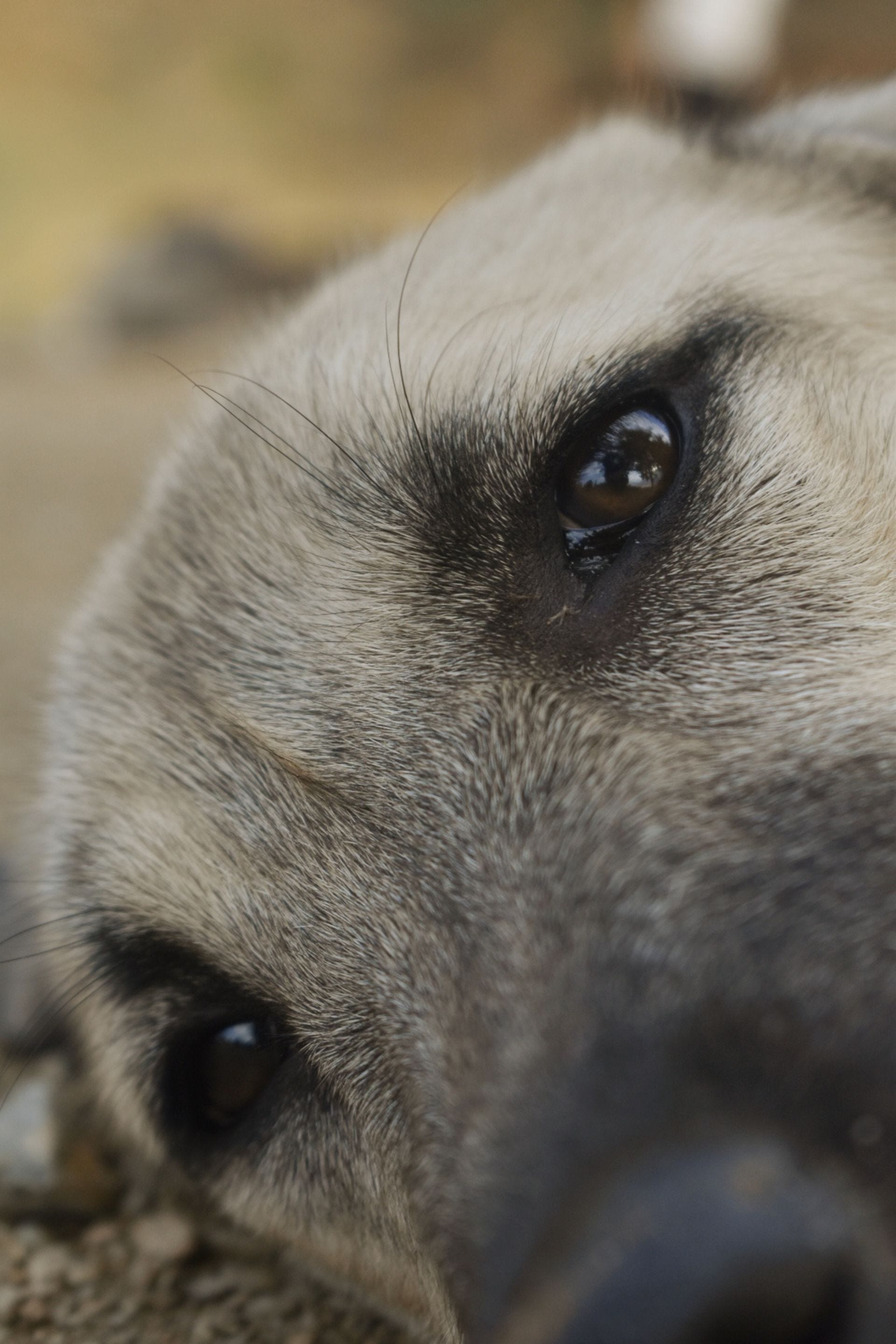
The boys had come for her dog. Mali had seen them loitering by the wat, a pack of five stray mongrels in human form, their leader a lanky sixteen-year-old named Gai. He had a sneer that seemed permanently etched onto his face, a cruel twist to his lips that promised trouble. They’d been kicking a stray cat a few days prior, their laughter high and sharp, cutting through the afternoon stupor. Mags had hidden then, clutching her own dog, Mali, a small brown mutt with one floppy ear and a heart so full of love it seemed to have no room for fear.
But Mags had no concept of the evil that festered in bored young men.
Her mother had sent her to the market for a bag of chillies. When she returned, the silence in the yard was the first sign. Mali, her pet, usually bounded to the gate, tail a frantic blur, her entire body a wriggling testament to joy. There was no joyous bark. Only a stillness that felt heavier than the heat. Her mother was inside, humming, preparing the evening meal, oblivious.
Then Mags saw the dust.
It was disturbed, scuffed up near the papaya tree. A few of her mother’s prized orchids had been crushed. And then she saw the patch of ground. It was darker than the rest, a rusty, crimson stain seeping into the red earth. A few tufts of brown fur clung to the mud.
A sound escaped Mags’ throat, a small, choked whimper that was swallowed by the oppressive air. She followed the faint, ghastly trail. It led to the back of the house, to the pit where they burned their rubbish. Her mother said it was to keep the snakes away.
Gai and his friends had been busy. They’d used a length of rope. They’d used a knife. The details were emblazoned in Mags’ mind, a series of snapshots she would never forget, each one a brand on her soul. The way Mali’s legs had been bound. The way her head had been held still. The sick, wet sound of the knife. The finality of the small, limp body being thrown onto the smouldering pile of waste. They’d left her there to burn, a final insult, a joke.
Mags didn’t scream. She didn’t cry. She stood by the pit, staring down at the pathetic, charred remains of her only friend. The world around her seemed to grey, the vibrant greens and blues of her village bleeding into a monochrome of sorrow and shock. She felt her heart, the one that had loved so purely, crack into a thousand sharp, jagged pieces.
That was when a new sensation began to form in the hollow space left behind. It was cold and black. It was a hunger that had nothing to do with food. It was a need for something to be right, for a terrible wrong to be repaid.
Over the following days, Mags went through the motions of a grieving child, a performance that would have won her an award. She was the perfect picture of sorrow. Her eyes were wide and glassy. She’d flinch at the sound of raised voices. Her mother, worried and perplexed, would pull her close, and Mags would let herself be held, her small body trembling with a cold fury she kept banked in the depths of her soul.
At the funeral the village held for the dog—a gesture of respect for a girl who had cried so bitterly her tears seemed to leave a stain on the earth—Mags was the centre of attention. She accepted condolences with a solemn little nod. When the village headman, a kindly old man named Lung Somchai, patted her head, she looked up at him with those wide, innocent eyes and whispered, “I miss her so much, Lung. My heart is broken.”
The performance was flawless.
Meanwhile, her mind was a workshop of meticulous planning.

She started with Gai. He was the leader, the one who had held Mali’s head still. He deserved the longest, most inventive punishment. Gai was a creature of habit, predictable in his cruelty. He loved cockfighting, and he’d spend his evenings at a bamboo shack on the outskirts of the village, betting small amounts of money he’d stolen from his mother.
Mags knew the path he took home, a narrow dirt track that cut through a dense thicket of banana trees. She knew he was always a little drunk, his bravado loosened by cheap rice whisky.
One evening, as twilight bled into a bruise-purple night, Mags was waiting. She was dressed in her best white blouse and a dark blue sarong, looking for all the world like a little girl waiting for her mother to come home from the fields. In her hands, she clutched a small, intricately carved wooden box.
When Gai stumbled into view, swaying and singing a lewd song, Mags stepped out of the shadows.
He stopped, a look of annoyance on his face. “What do you want, brat? Get out of my way.”
Mags held up the box, her hands steady. “I have something for you, P’Gai. A gift.” Her voice was the sweet, melodic sound of a songbird.
Gai eyed the box greedily. It was old, the wood dark and glossy. The carvings were of naga, the mythical serpent, their scales intricate. He saw value. “What is it? Some junk from your grandmother?”
“It’s a friend,” she said, her smile as innocent as a fresh lotus. “For you to play with.”
She opened the box.
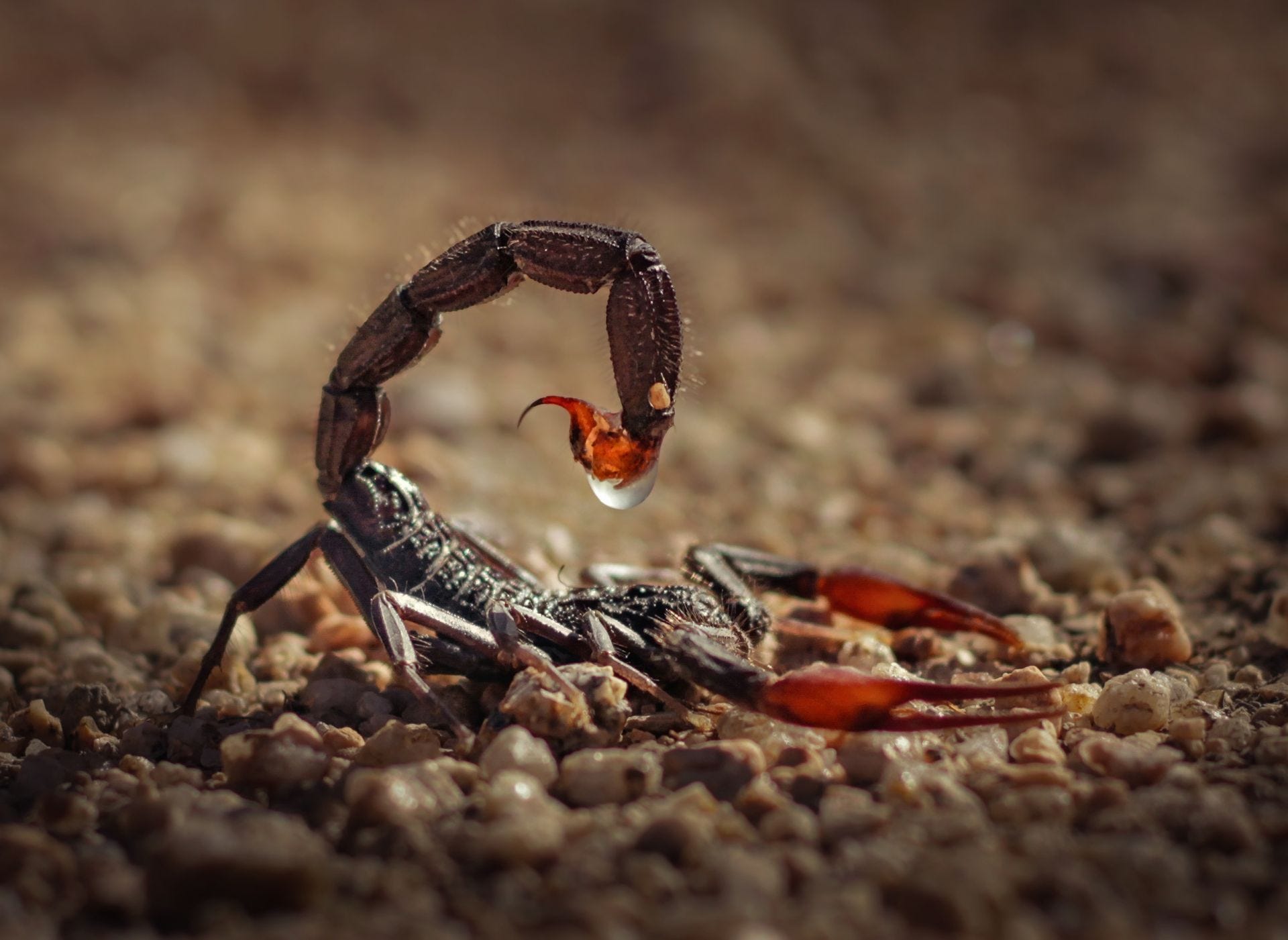
Inside, nestled in a bed of soft, red silk, was a scorpion. It wasn’t just any scorpion. It was the most venomous one in the province, a creature with a thick, dark tail and pincers like tiny, bone-crushing hands. Mags had been catching and releasing them for a week, finally capturing this one under a large stone. She’d kept it in the box, feeding it beetles, preparing it for its important work.
Gai leaned forward, his drunken curiosity getting the better of him. He saw the glint of its exoskeleton in the fading light. “What the…?”
He never finished the sentence. The scorpion, agitated by the sudden movement and light, struck. It was a blur of motion, its tail whipping forward to sink its stinger into the fleshy webbing between Gai’s thumb and forefinger.
He screamed, a high, piercing wail that was swallowed by the thick vegetation. He flung the box away, but it was too late. The venom was already coursing through him, a fire in his veins. His eyes widened in horror and pain as his throat began to swell, his breathing becoming a ragged, wet gasp.
Mags watched. She didn’t flinch. She didn’t scream for help. She just stood there, her hands clasped neatly in front of her, observing his suffering with the detached curiosity of a scientist. He dropped to his knees, clawing at his throat, his face turning a terrible shade of purple.
When he was still, Mags approached him. She knelt, picked up the scorpion box, and placed it back in her small sack. She looked at Gai’s contorted face, his eyes still open and fixed on the darkening sky. There was no pity in her heart. She felt nothing. Not anger, not relief. A terrible, quiet emptiness.
The next day, the village was in an uproar. Gai had been found in the communal waste disposal pit, a place on the edge of the village where all the rotten food and rubbish was dumped. He looked as though he’d suffered a massive heart attack, or a severe allergic reaction. The village doctor, a man who knew his herbs better than his medicine, was baffled. Malaria? A snakebite? He’d found the small puncture wound on his hand, but he couldn’t identify the cause. It was deemed a tragedy, a freak accident.
Mags was there with the other children, her face pale and drawn. She watched as they carried the bamboo stretcher away, her expression one of profound sadness. She even let a single tear fall, a perfect, glistening droplet that she had been practising in the mirror for hours. The village women cooed and clucked their tongues, drawing her close. “There, there, little one. It’s a terrible thing.”
The second boy was a paunchy boy named Somchai. He was the one who had tied the rope around Mali’s legs. He had a passion for food, especially sweets, and was known to sneak into the temple kitchens to steal the offerings left for the monks. He was considered a glutton, a source of amusement for the other boys.
Her method this time was more subtle. She’d ground up a handful of the dried, bright red seeds of the pyrethrum daisy, a potent poison for insects. To the untrained tongue, it was just a bitter powder. Mags mixed it into a bowl of sticky rice and mango, a treat she knew he wouldn’t be able to resist. She’d left it on a low wall near the temple, just where he’d be sure to find it on his nightly forage.
She watched from behind a pillar as he greedily gobbled it down, wiping his hands on his dirty shirt. He went home to sleep, to have his final dream.
He didn’t wake up. The poison, once ingested, caused a slow and progressive paralysis of the muscles, including the heart and diaphragm. He died in his sleep, a peaceful smile on his bloated face. His mother found him the next morning, thinking he was just being lazy. The horror that followed was palpable.
When his body was discovered in the waste pit the day after, the pattern was now chillingly clear. Two of the boys, the ones who had formed the core of the gang, both dead, both ending up in the same dump.
The village started to whisper. A curse. A spirit. The vengeful ghost of the murdered dog.
Mags was the perfect picture of frightened innocence. She would cling to her mother’s sarong, her eyes darting around, full of fear and sadness. “It’s so scary, Mae,” she’d whisper. “Who would do such a thing?” And her mother would tighten her grip, her own mind clouded by superstition, muttering prayers to the dog’s spirit to guide it to the next life.
The third boy, a skinny, snivelling boy named Noi, was a coward. He’d been the lookout. He’d held the knife and watched, but he hadn’t done the cutting. He deserved a quicker, simpler death. He was afraid of the dark and terrified of snakes.
For three nights, Mags had been hiding a small, harmless-looking snake in the grass near his favourite spot. He liked to sit on the temple steps after dark, trying to prove his courage by not running home. On the fourth night, she switched it out. The snake she placed there was a juvenile pit viper, its venom potent, its bite fast and aggressive.
She didn’t even need to stay and watch. She heard his scream from her house, a short, sharp cry of terror that was cut off abruptly. They found him slumped on the steps, a look of pure, unadulterated terror on his face, the bite marks on his ankle small and neat. He was taken to the waste pit the next day, where he joined his friends.
The village was under siege. People locked their doors at night. Dogs, normally left to roam, were kept inside. The men gathered in groups, whispering, their eyes darting into the shadows. The dog’s spirit was strong. It was taking its revenge. Only the headman, Lung Somchai, was stubbornly logical. He dismissed the talk of ghosts and curses, but he had no other explanation. He thought it was a madman, a drifter, or perhaps a feud with a neighbouring village.
The fourth boy, the one who had watched with a sickening grin and handed the knife to Gai, was the strongest of them all. His name was Kong. He was a blacksmith’s son, with thick, ropy muscles and a small, dull brain. He wasn’t afraid of much, but he was scared of his father, a huge, abusive man who could lift an anvil.
His father was also a heavy drinker.
Mags made her move at the village festival. The sound of the pi pae, the traditional Thai music, filled the air, and the scent of grilled pork and sticky rice was thick. The adults were drinking, and the children were running around with sparklers. Kong’s father was deep in his cups, his face red and belligerent. Mags approached him, looking like a lost little lamb.
“Uncle,” she said, her voice small and trembling. “I… I think I broke your hammer. I was playing by your workshop, and it fell.”
The man’s eyes, already cloudy with rage, focused on her with a terrifying clarity. “You broke my hammer?” He roared, pushing himself up from his stool. He was a mountain of a man, his anger a force of nature.
Mags nodded, her lip trembling. “I’m so sorry. It was my fault.”
Kong, seeing his father get up, was already cowering. He knew the signs.
“Wait here,” the blacksmith grumbled to his son, his voice thick and angry. “I’ll deal with you later.” He stomped off to the workshop, a small, dark building behind his house.
Kong, left alone with the girl, had a moment of confusion. But before he could process it, Mags looked him in the eye. Her mask slipped, just for a second. She gave him a small, cold smile that didn’t reach her eyes. “Your father won’t be happy, P’Kong. Not when he finds out it wasn’t me. He’ll be furious at you.”
Kong’s face paled. He knew the punishment would be terrible. For a moment, he was too stunned to move. Then, a flicker of fear. He had to get to his father first, to warn him. He didn’t want the beatings to start again.
But Mags had already slipped away into the crowd, a ghost in the night.
Kong ran to the workshop, a blur of panic. But the door was locked. He pounded on it, his voice high and desperate. “Father! Wait! It was a trick!”
There was no answer. He could hear movement inside. But then, a crash, a heavy thud, and a low groan that was cut short. Kong threw himself against the door, splintering the wood. He burst inside.
He found his father lying on the floor. A heavy block of iron had been strategically rigged from the ceiling. A rope, thin and almost invisible in the gloom, had been the trigger. The block had fallen, striking the blacksmith’s skull with a sickening crack. He was dead.
Kong fell to his knees, sobbing. But his relief was short-lived. Outside, a crowd of villagers, drawn by the noise, had gathered. They’d heard the crash. They’d heard the scream. And when they saw Kong on his knees over his father’s body, his hands bloody from trying to turn him over, they didn’t see a grieving son. They saw a murderer.
He was taken away by the headman’s men, a prisoner of his own village, his denials falling on deaf ears. The story was simple: a fight, a son’s rage, a terrible accident. They didn’t bother with the waste pit for him. He was a disgrace. He was shunned and then, in a fit of village justice, disappeared, taken to the provincial police.
Now, only one boy was left. He was the youngest, only thirteen; his name was Nong. He had been the one to set the fire, to throw her dog, Mali, onto the pyre of burning rubbish. He was easily spooked, a scared boy who had just been following the older ones. He had nightmares. He’d been the first to see the ghosts in his sleep.
Mags found him a few days after Kong’s arrest. He was hiding in the back of a disused shrine, a place where the villagers left old offerings to forgotten spirits. His face was haggard. He hadn’t slept. He hadn’t eaten. He was a shadow of the boy who had cheered as the flames had licked at the fur.
He saw her enter and whimpered, backing away until his spine hit the crumbling brick wall. “Please,” he whispered, his eyes wild. “Please don’t hurt me. I’m sorry. I’m so sorry.”
Mags walked towards him, her steps silent. In her hand, she held the same wooden box she had used for Gai, but it was empty.
“You didn’t hold her,” Mags said, her voice soft and flat. “You didn’t cut her. You just threw her on the fire. You took away her chance to be buried. You turned her into smoke and ash.”
Nong was weeping openly now, his tears making tracks in the grime on his cheeks. “I was scared of Gai! He would have hurt me!”
Mags stopped in front of him. She looked at him, a long, searching look. She saw the genuine terror in his eyes, the tears, the remorse that was born of fear, not of guilt.
A part of her, a small, withered piece of the little girl she used to be, considered letting him go. A part of her remembered how loud the fire had been, and how the smell of burning hair had choked the air. The cold, black hunger in her heart raged against it. Why should he get to live? Why should he get to keep his life, when Mali, her Mali, had been reduced to nothing?
She raised her hand, holding the empty box. She opened it, showing him the empty, red-silk-lined interior.
“There is no scorpion,” she said, her voice devoid of emotion. “There is no poison. I have no snake. I have nothing to hurt you with, Nong.”
He blinked, his sobs slowing. A flicker of hope, as pathetic as it was desperate, appeared in his eyes.
“Get up,” Mags said.
He scrambled to his feet, a slow smile of relief starting to form on his face. “You’ll forgive me? You’ll really let me go?”
Mags shook her head. “No, Nong. I don’t forgive you.” She took a step back. “But I’m not going to do anything to you. You’re too small. You’re just a child.”
His smile faltered. He looked around the empty shrine, a cold dread beginning to seep back into him.
“It’s the others,” she said, her voice dropping to a whisper. “They’re waiting for you, Nong. Gai is angry. He says you ran away. He says you let him die. So did the others. They think you should have stopped me. They’re here, Nong. They’re waiting for you.”
His eyes darted wildly around the shadows of the shrine. And in that moment, in the dark, he saw them. Or he thought he did. A movement, a flicker of light. It was enough. The fear he had felt for the dead was a thousand times worse than the fear he’d felt for the living. A chilling, guttural scream tore from his throat, an animal sound of pure, primal terror.
He scrambled past Mags, knocking her aside, and ran screaming into the night, toward the waste pit. He didn’t stop running until his foot slipped on a mound of rotting vegetables, and he tumbled headfirst into the reeking, foul-smelling void.
He didn’t get up.
The next morning, they found him at the bottom of the pit, his neck bent at an unnatural angle, a look of absolute horror frozen on his young face—a tragic, freak accident. The last of the five boys was dead.
At his funeral, Mags stood with her mother. She was dressed in a new white blouse and a clean blue sarong. She looked the very picture of sorrow for the poor, troubled boy who had been so scared that he’d fallen to his death.
A photographer from the provincial newspaper came to photograph the grieving village. He focused his lens on the group of women and children. Mags was in the front, her head bowed, her hands clasped together as if in prayer. Her mother stood behind her, a hand resting on her small shoulder.
After the photographer left, Mags felt a gentle hand on her chin. It was the village headman, Lung Somchai. He lifted her face, tilting it up. His kind eyes searched hers.
“Such tragedy, little one,” he said softly, a strange note in his voice. “One after another. The boys, and now Kong’s poor father. It has been a terrible, terrible time for all of us.”
Mags met his gaze, her own eyes a fathomless pool of sorrow and innocence. She nodded, her face perfectly solemn.
“I’m so sad, Lung,” she said. “It’s so hard to understand why such bad things happen to good people.”
The headman looked into her eyes. He saw the grief, the perfect, sculpted grief. But for a fleeting second, he also saw something else. A dead, wintery stillness in the very back of her gaze. A terrifying, final emptiness. His hand dropped from her chin as if he’d been stung. He took a step back, his kind face paling.
Mags turned away from him, a small, serene smile playing on her lips. As she walked home, past the waste pit with its fresh, sour smell, past the temple where the monks were chanting for the souls of the dead, she felt a strange sense of completion. She was empty inside, a hollow vessel. The cold, black hunger was gone.
It had been fed.
Now, all that was left was the quiet, until the next time.
The END
Would you like a FREE book? 5 days only - Fri 3rd July to Tues 7th July.

Click HERE
This story kept building tension without rushing, and what impressed me most was how Mags’ transformation felt gradual rather than sudden. The ending, especially the headman’s silent recognition that something had changed forever inside her, was chilling because it relied on restraint rather than spectacle. A haunting story that lingers long after the final sentence.
Another one ! Nice